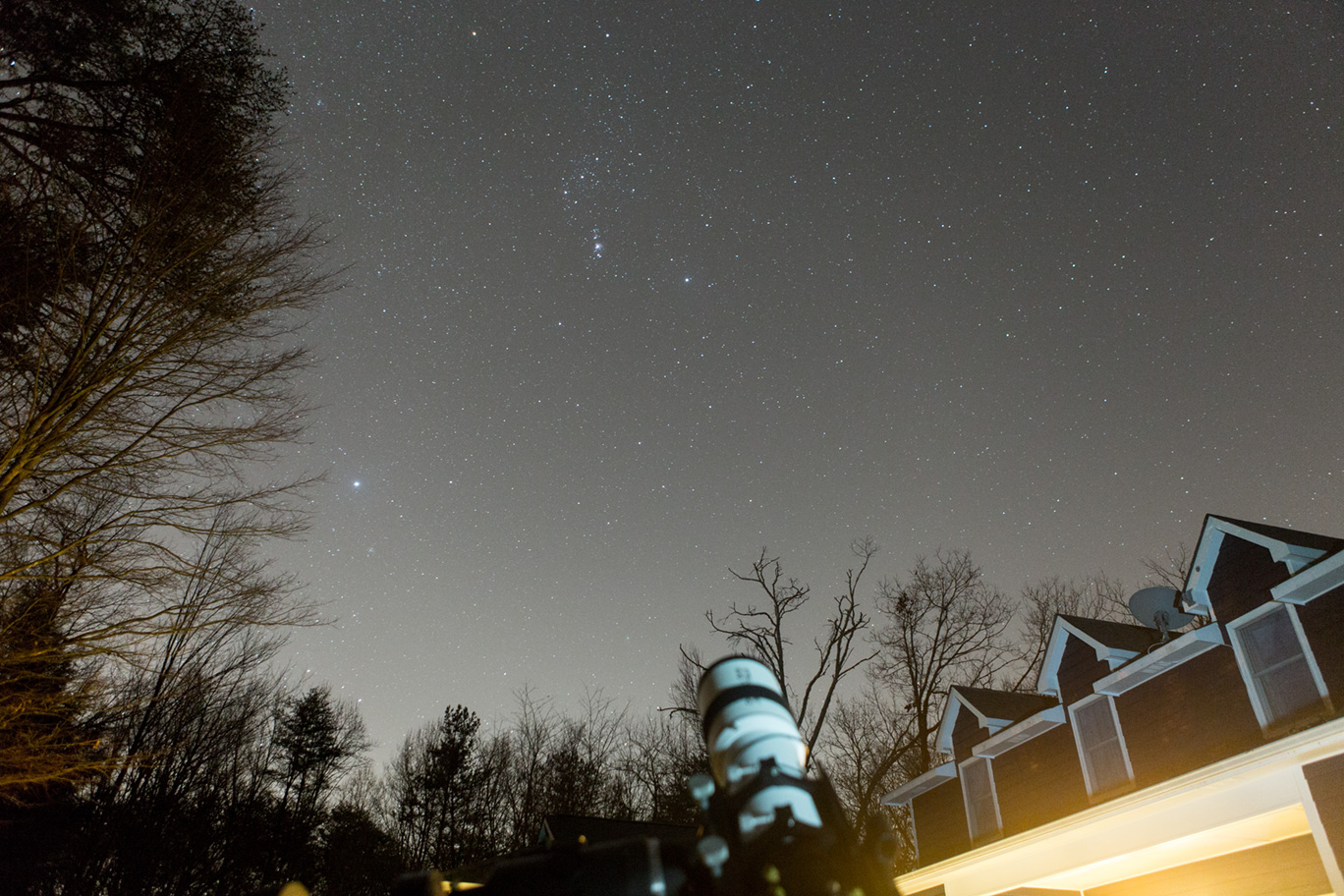
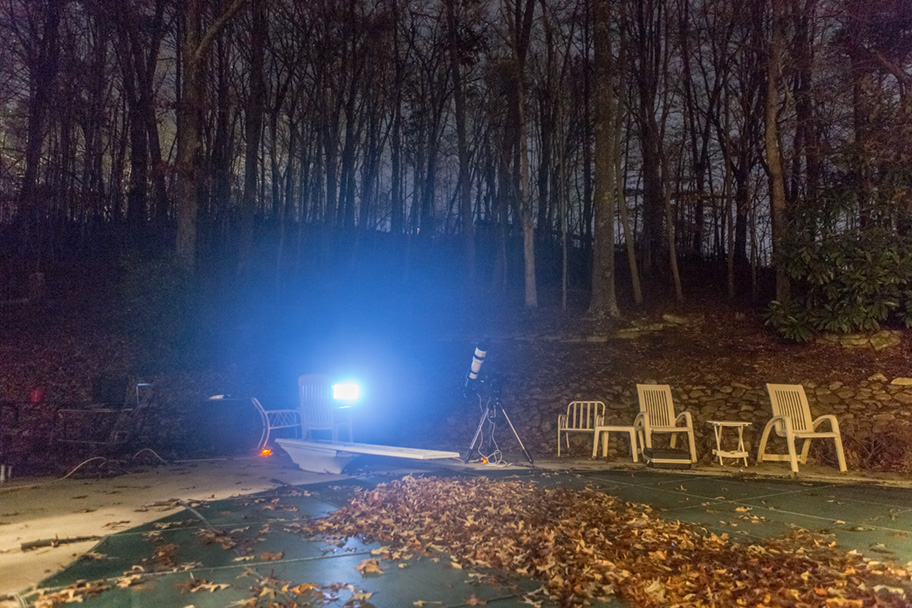
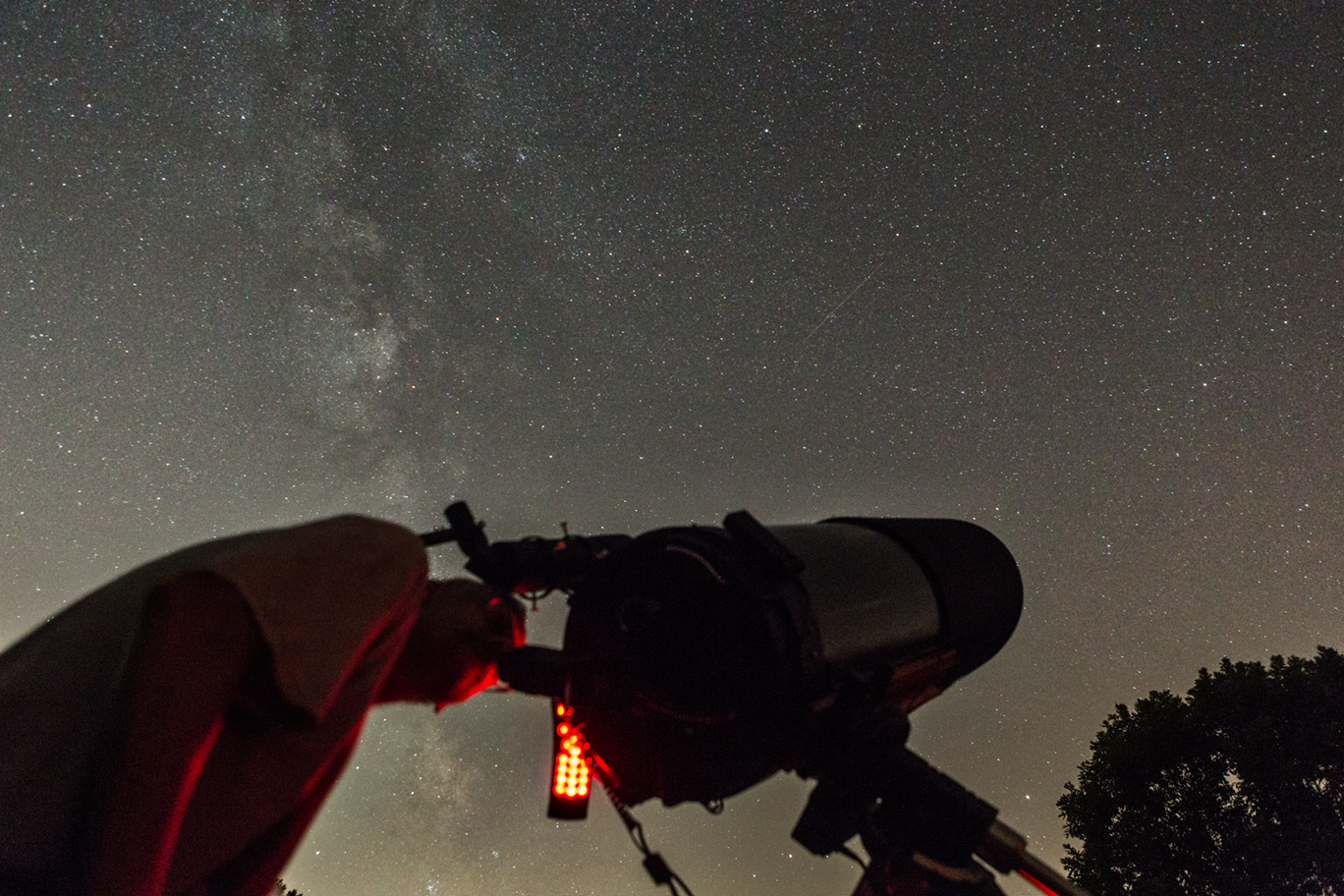
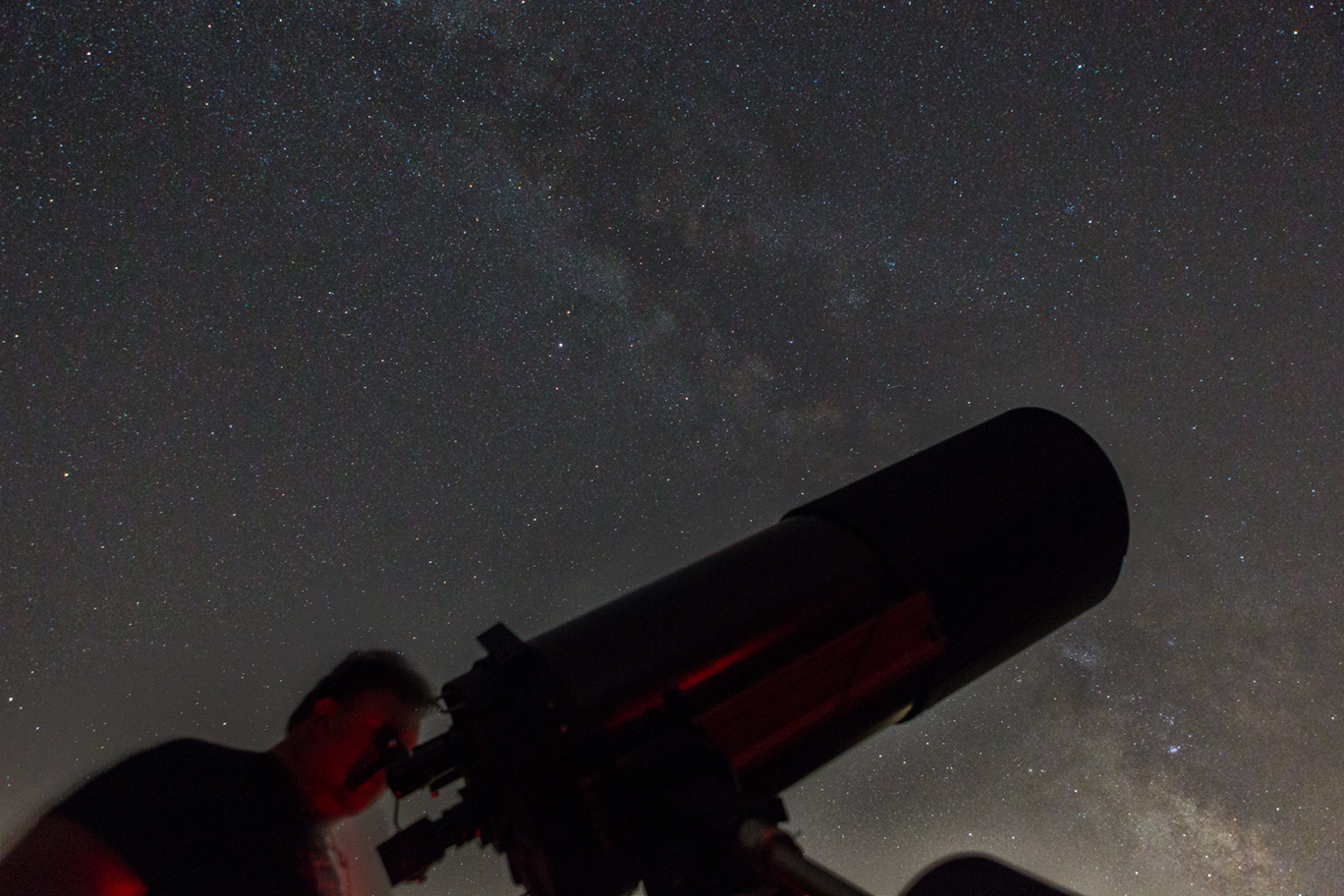
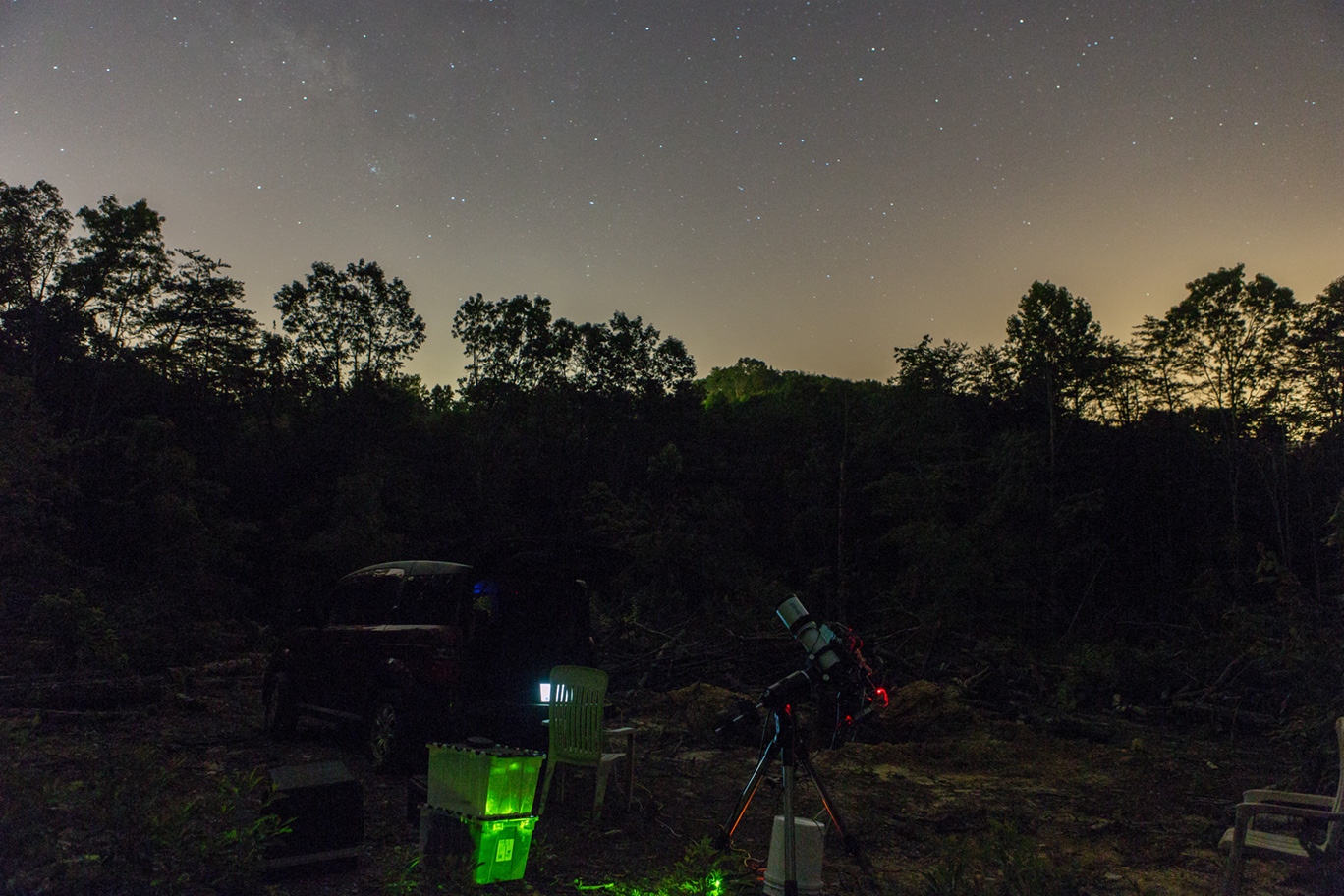
This was my first visit to Fall Creek Falls for the 2015 Tennessee Fall Star Gaze. It’s a casual get together held at a clearing within walking distance from the Inn. The site is reasonably dark measuring 21.42+ on Friday and 21.31 on Saturday after some thundershowers upped the humidity level. Both nights were good so long as you were prepared for dew.
I spent both nights gathering data on SH2-155; the Cave Nebula. It’s a fairly dark object and I’d like more than the 4.5 hours of exposure time I got on it but a couple technical issues coupled with the early moon rise limited my time….
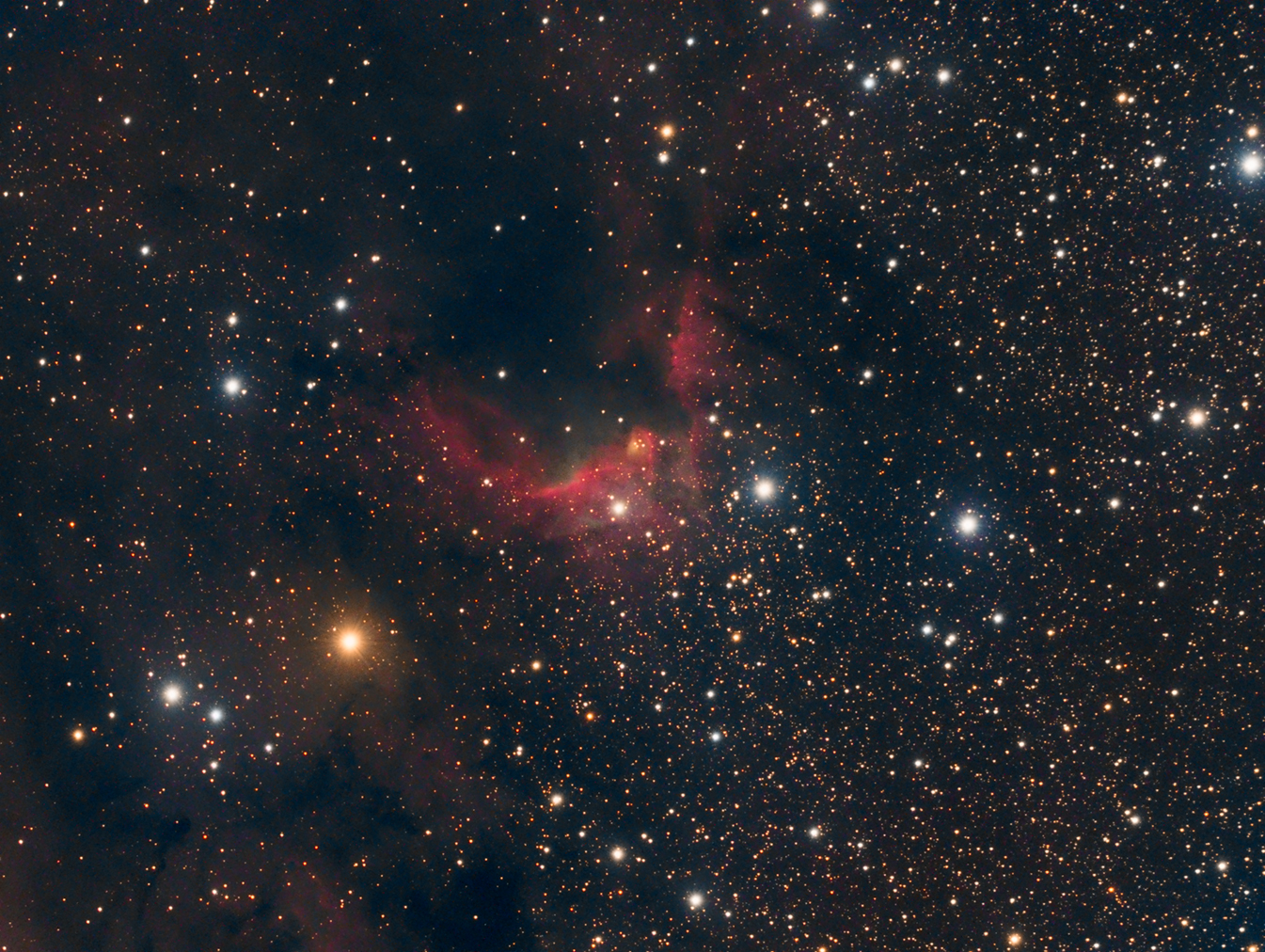
SH2-155
AP130EDT f/8 reduced to f/6
AP900GTO3 Mount
Apogee Ascent A694 CCD
9x10min Lum
7x10min Red
6x10min Green
5x10min Blue

SH2-155 Annotated
S 155, also known as the Cave Nebula, Sh2-155 or Caldwell 9, is a dim and very diffuse bright nebula within a larger nebula complex containing emission, reflection, and dark nebulosity. It is located in the constellation Cepheus.
Visually it is a difficult object, but with adequate exposure, makes a striking image. The nebula gets its name Cave Nebula from the dark lane at the eastern side abutting the brightest curve of emission nebulosity which gives the appearance of a deep cave when seen through a telescope visually.
Information Courtesy of Wikipedia
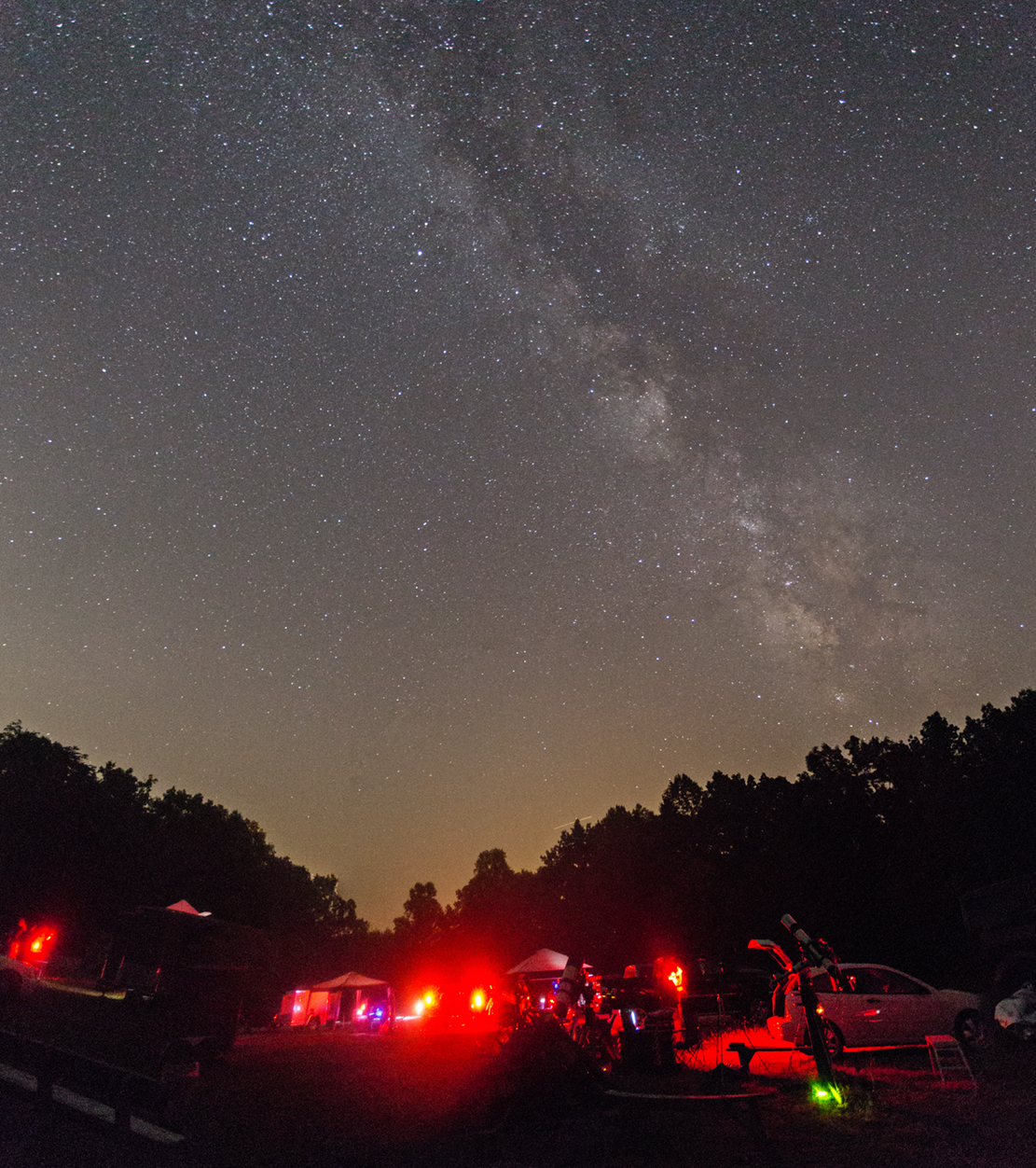
Fall Creek Falls Milky Way Pano
Canon 6D, 17-40mm @ 17mm f/4, 20sec
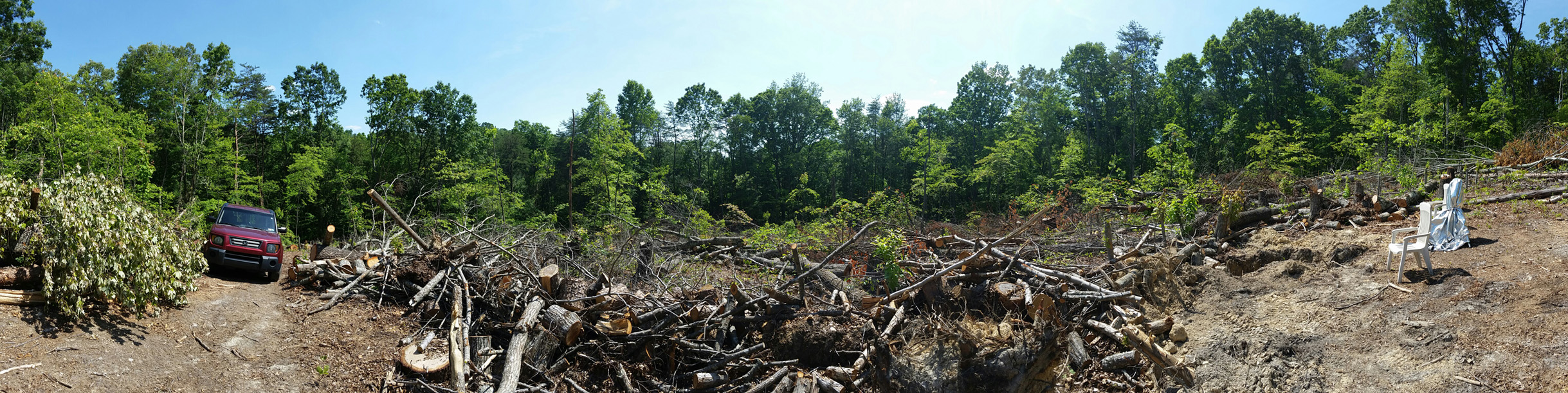
This was my first time to Fall Creek Falls and I was not sure what to expect in terms of amenities. For those of you considering going: Restrooms are a 1000+ ft walk from the site. There are no restrooms at the field, nor is there any power, water, etc. The only things available at the site are trashcans. The Inn, as I mentioned before, offers restrooms, along with buffet meals, vending machines, and accommodations on the lake.


![Cygnus Mosaic Cropped & Reduced to 50% Size. 9 Panels, 1x20min per Ha, O[III], S[II] Channel per panel. Total Time 9 hours. Taken with an Apogee U16M and Tak FSQ-106ED.](http://www.celestial-imaging.com/wp-content/uploads/2015/05/Cygnus-Mosaic-20150531_V2.jpg)

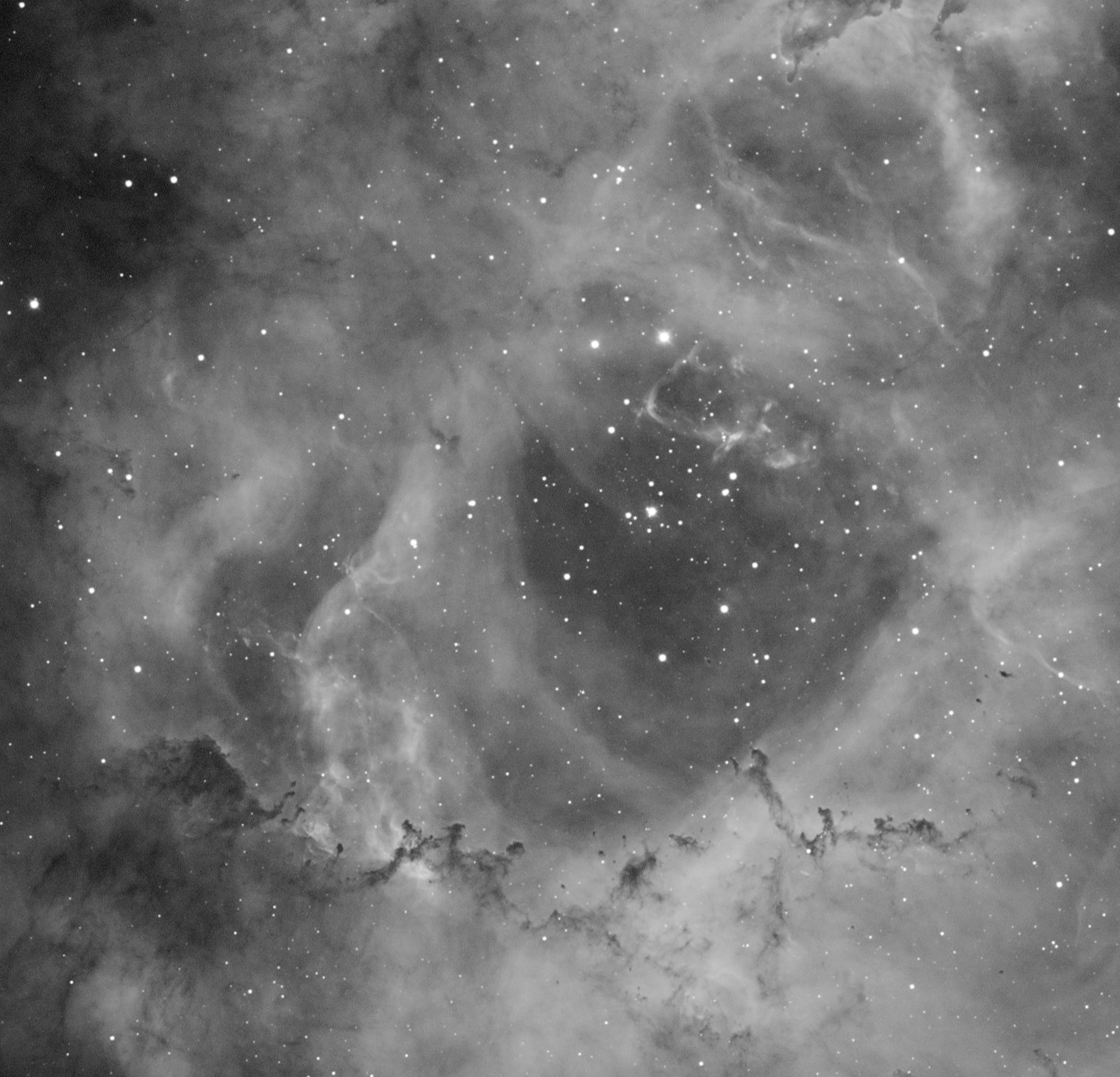
![The Rosette Nebula: Apogee U8300 CCD, Stellarvue SVQ100 APO, Atlas EQ-G, Astrodon 3nm Filters, 6x20min each Ha, O[III], S[II].](http://www.celestial-imaging.com/wp-content/uploads/2015/01/Rosette-Stack-Hubble-2.jpg)