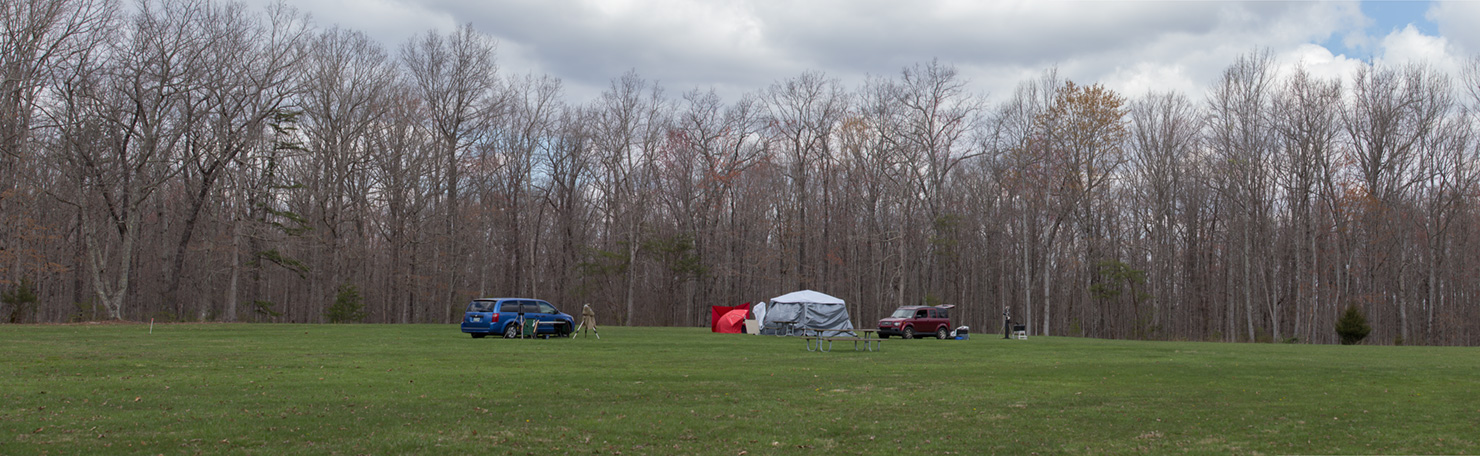
The first arrivals setting up on the astronomy field
On April 1st through April 3rd Pickett State Park, a newly designated IDA Dark Sky Site, held its first Astronomy Weekend Star Party. We were clouded out Friday night but clouds on Saturday finally yielded to clear skies albeit with some very gusty winds until the wee hours of the morning.
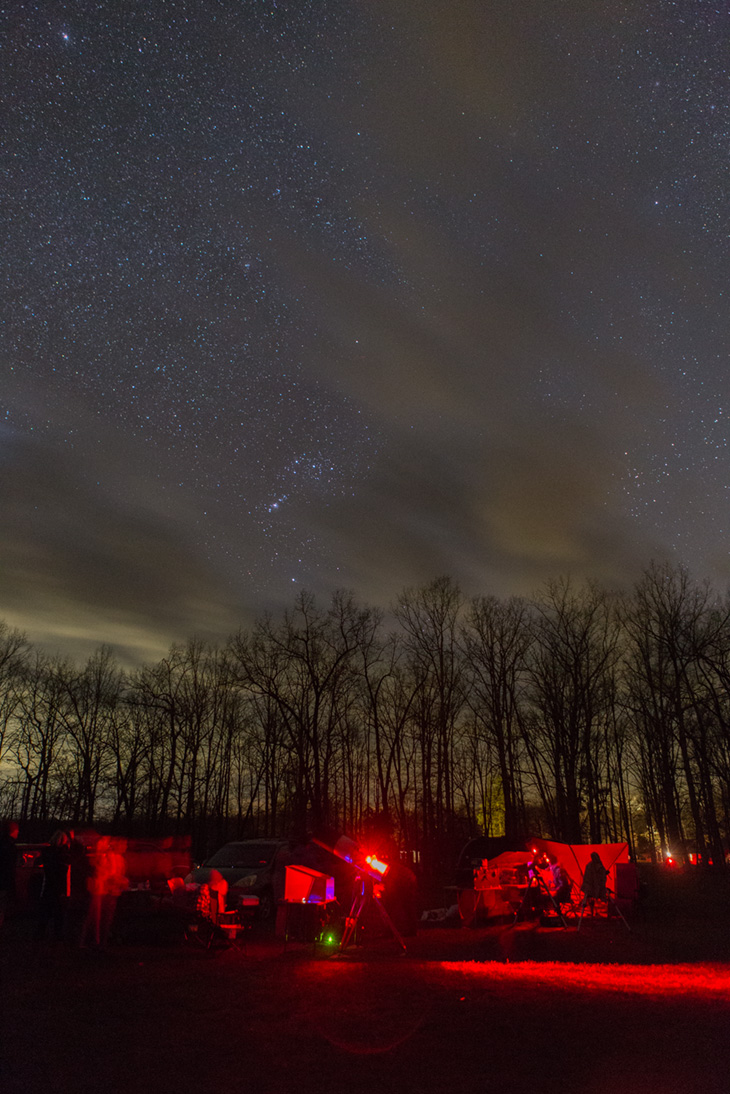
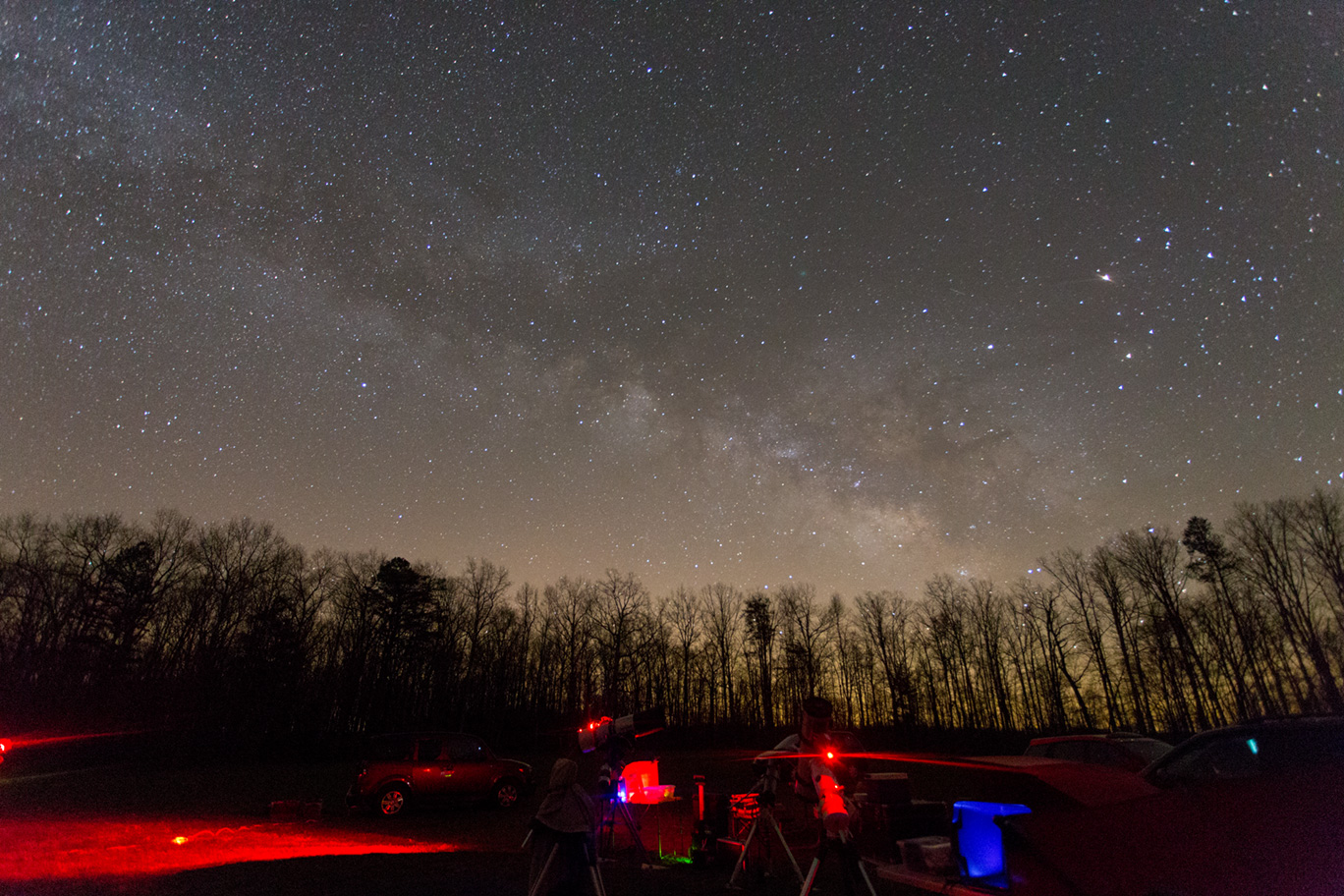
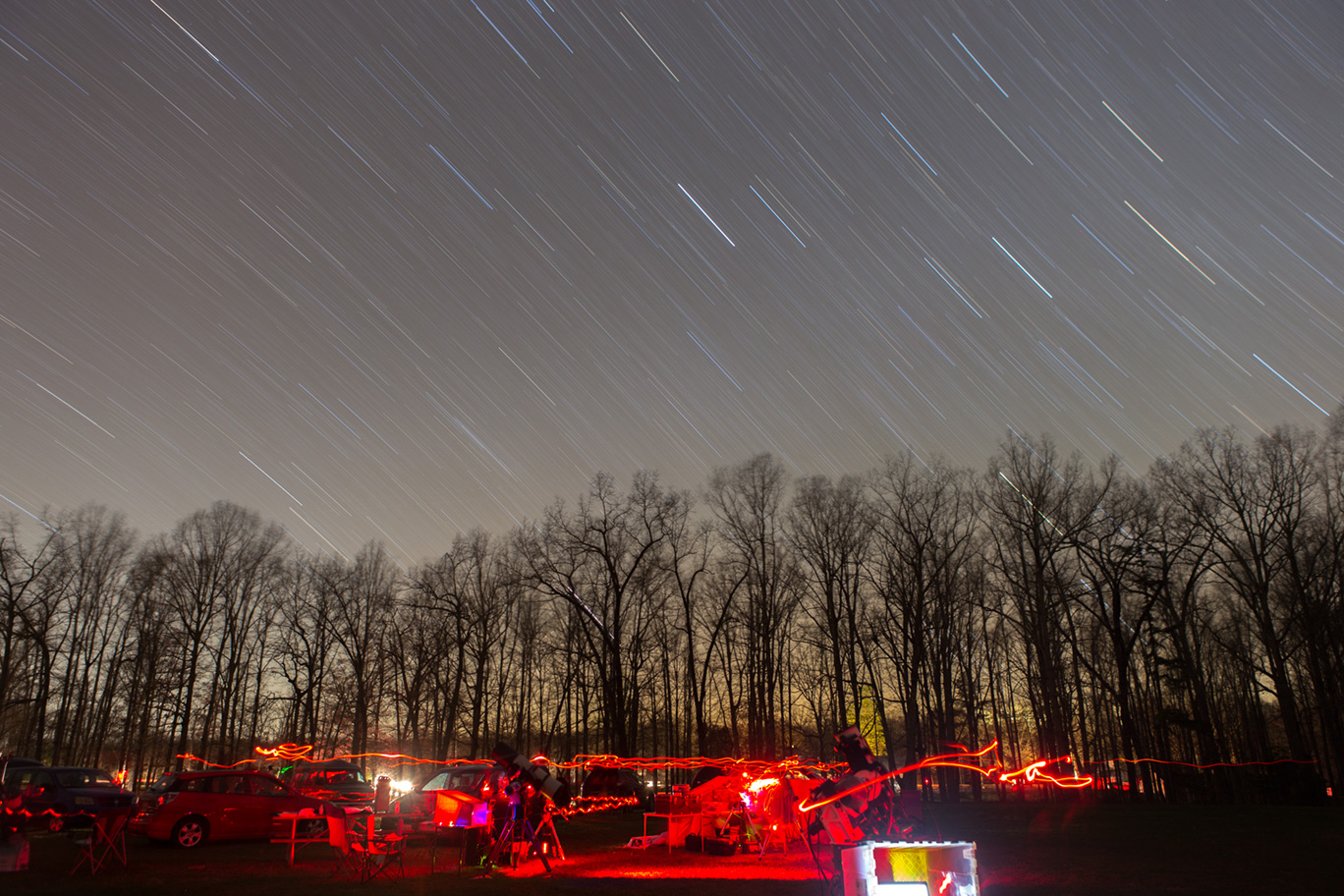
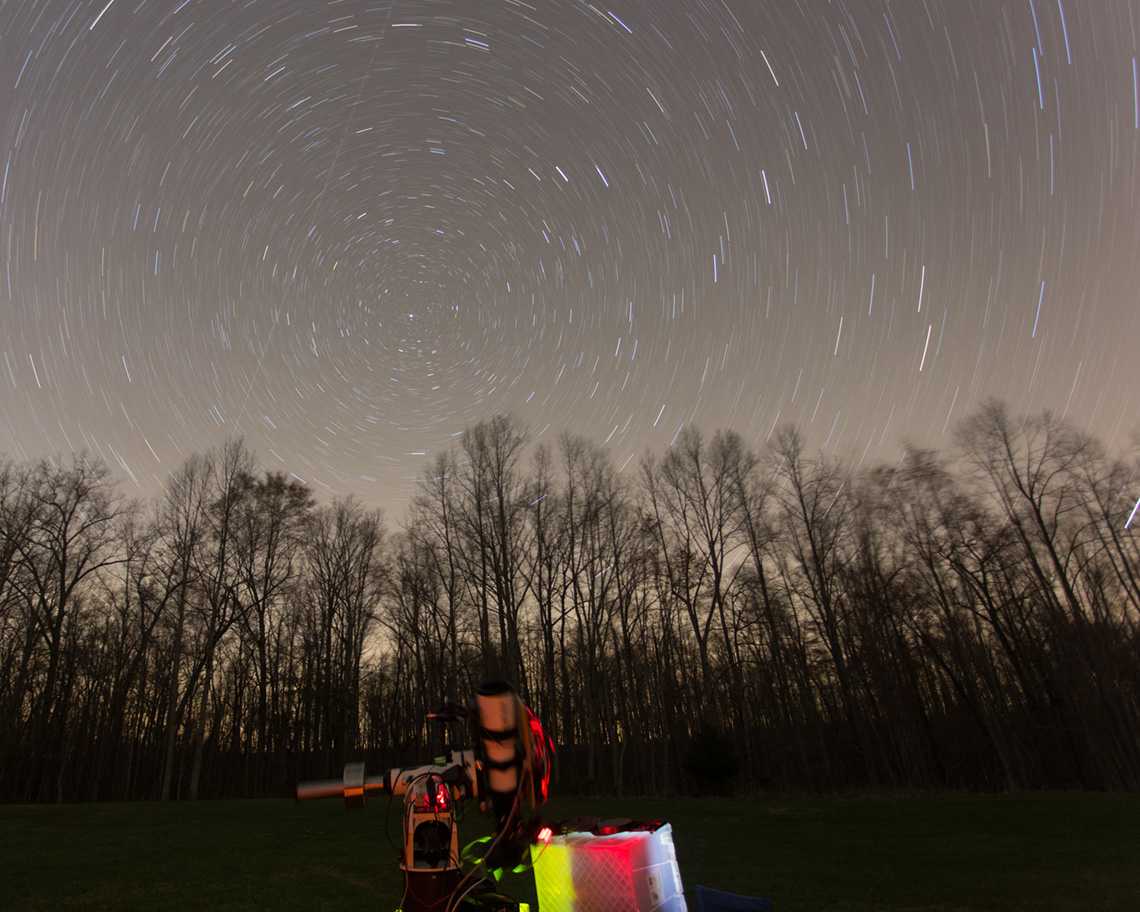
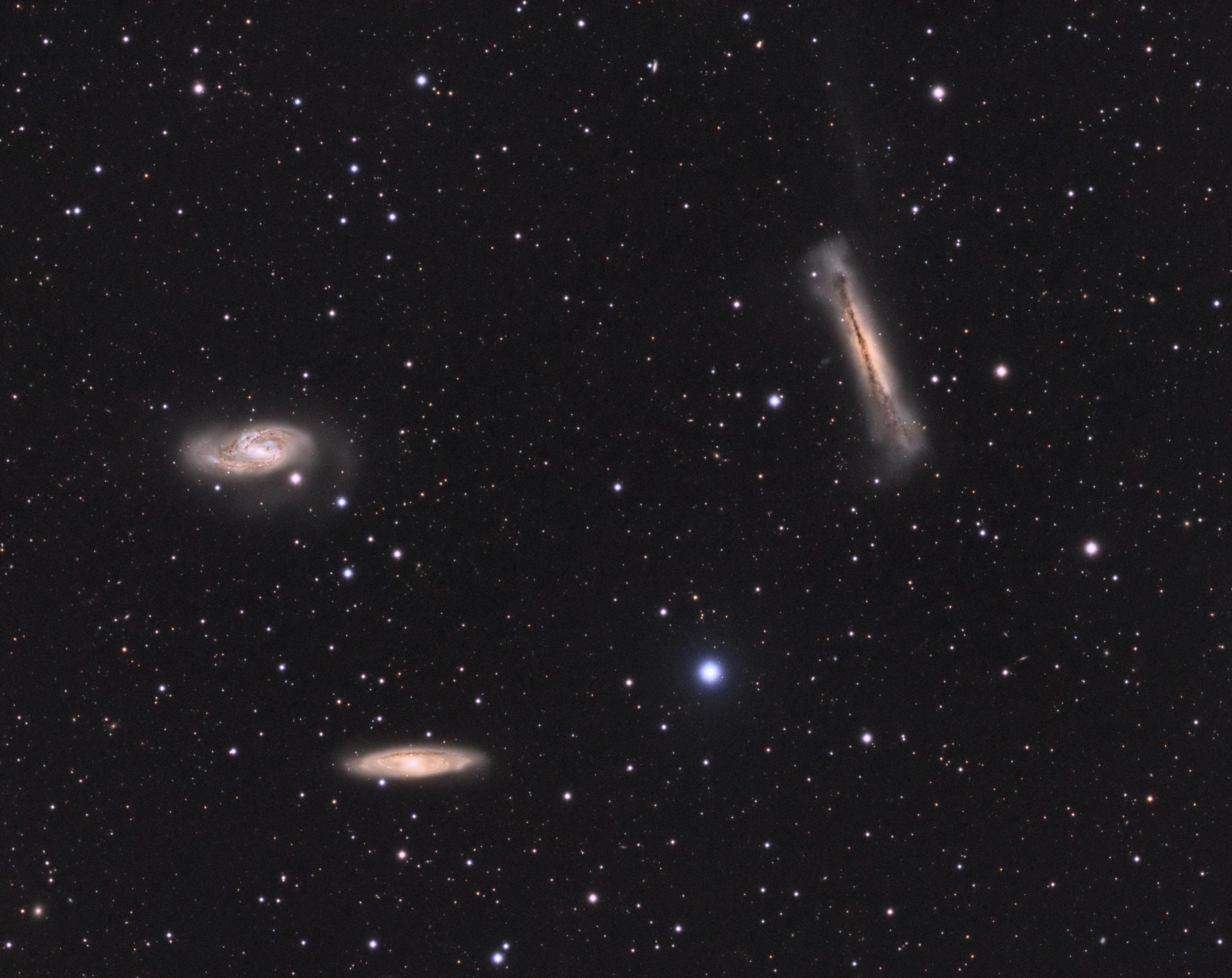
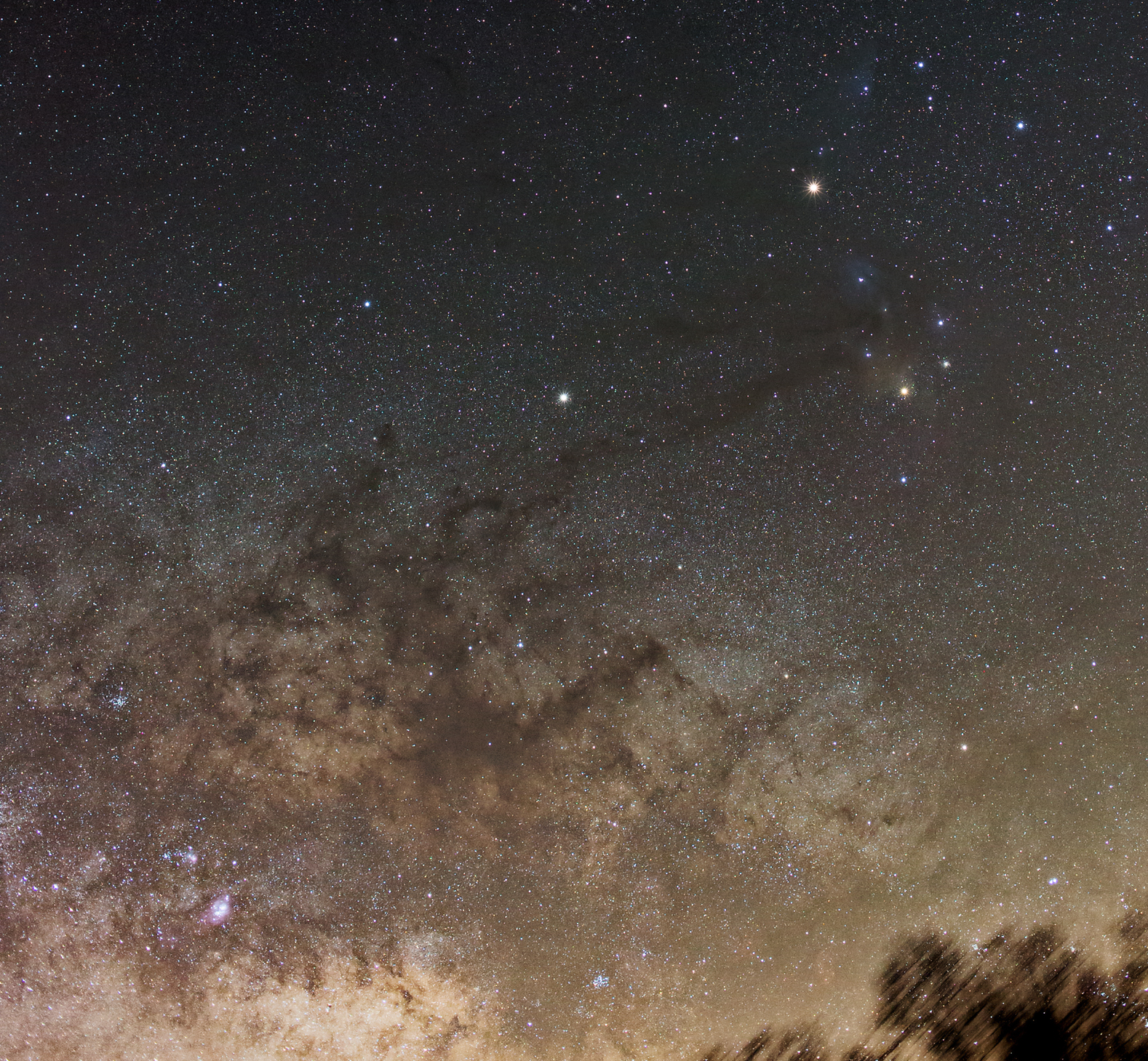
Waiting for Clouds to Clear while Orion setsEarly morning Milky Way rising over the astronomy fieldStar Trails over the astronomy fieldPolar Region Star TrailsThe Leo Triplet – M65, M66, & NGC 3628 Stellarvue SVQ 100, Apogee Ascent A694, AP900GTO Mount, Exposure 4 hours, SQM 21.48Rho Ophiuchi Cloud Complex stretching down to the Lagoon Nebula Canon 6D with 40mm f/4 ISO 1600 4min single exposure
My buddy and I drove up to Pickett State Park which recently was designated a Dark Sky Park by the International Dark Sky Association. The night wasn’t perfect; cold, little too windy, and high thin clouds to the south that at times mucked with our images. I had wanted to test out a new widefield camera tracker from StarSync LLC. Unfortunately, I forgot my intervalometer so I was limited to 30 second exposures which isn’t the best test. Still, I think it’s the tracker I’ve been waiting for. I love the design.
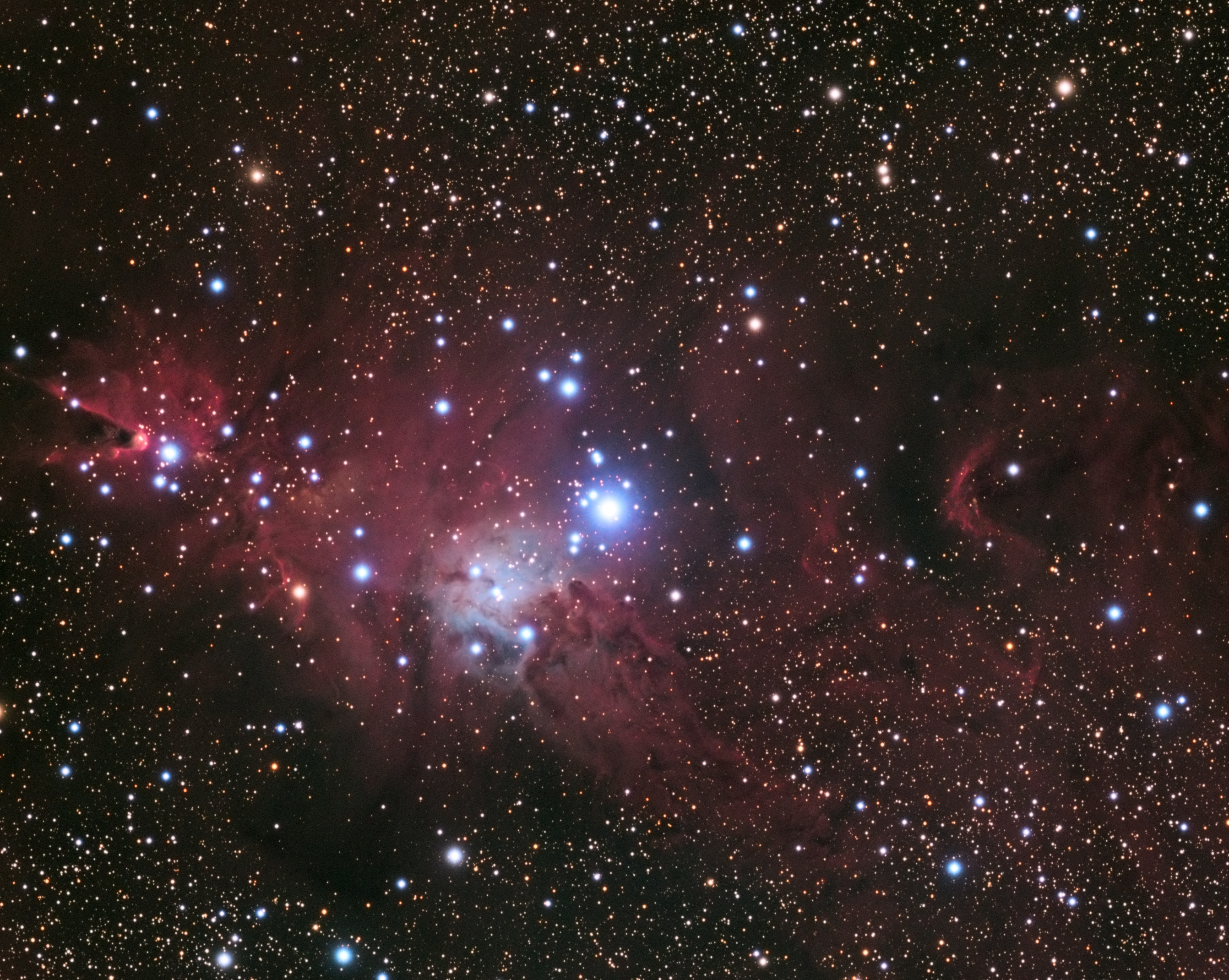
NGC 2264, Sh2-273: The Fox Fur and Cone Nebula. Taken with a Stellarvue SVQ100, Apogee Ascent A694 CCD, Atlas Mount, Baader LRGB Filters, Lodestar Autoguider CCD through an SX-OAG. Exposure time was 21x10min Lum, 6x10min each RGB. Sky brightness (SQM) ranged from 21.2 to 21.38 mag/arcsec^2.
This enigmatic formation of gas and dust lies in the constellation of Monoceros (the Unicorn) not far off the right arm of Orion. This is a close-up of a small section of a much larger complex, generally known as the Christmas Tree cluster. The mysterious Cone Nebula is also a part of this same cloud.
The red regions of this nebula are caused by hydrogen gas that has been stimulated to emit its own light by the copious ultraviolet radiation coming from the hot, blue stars of the cluster. The blue areas shine by a different process: they are mainly dust clouds that reflect the bluish light of the same stars.
Its popular name arises because the nebula looks like the head of a stole made from the fur of a red fox.
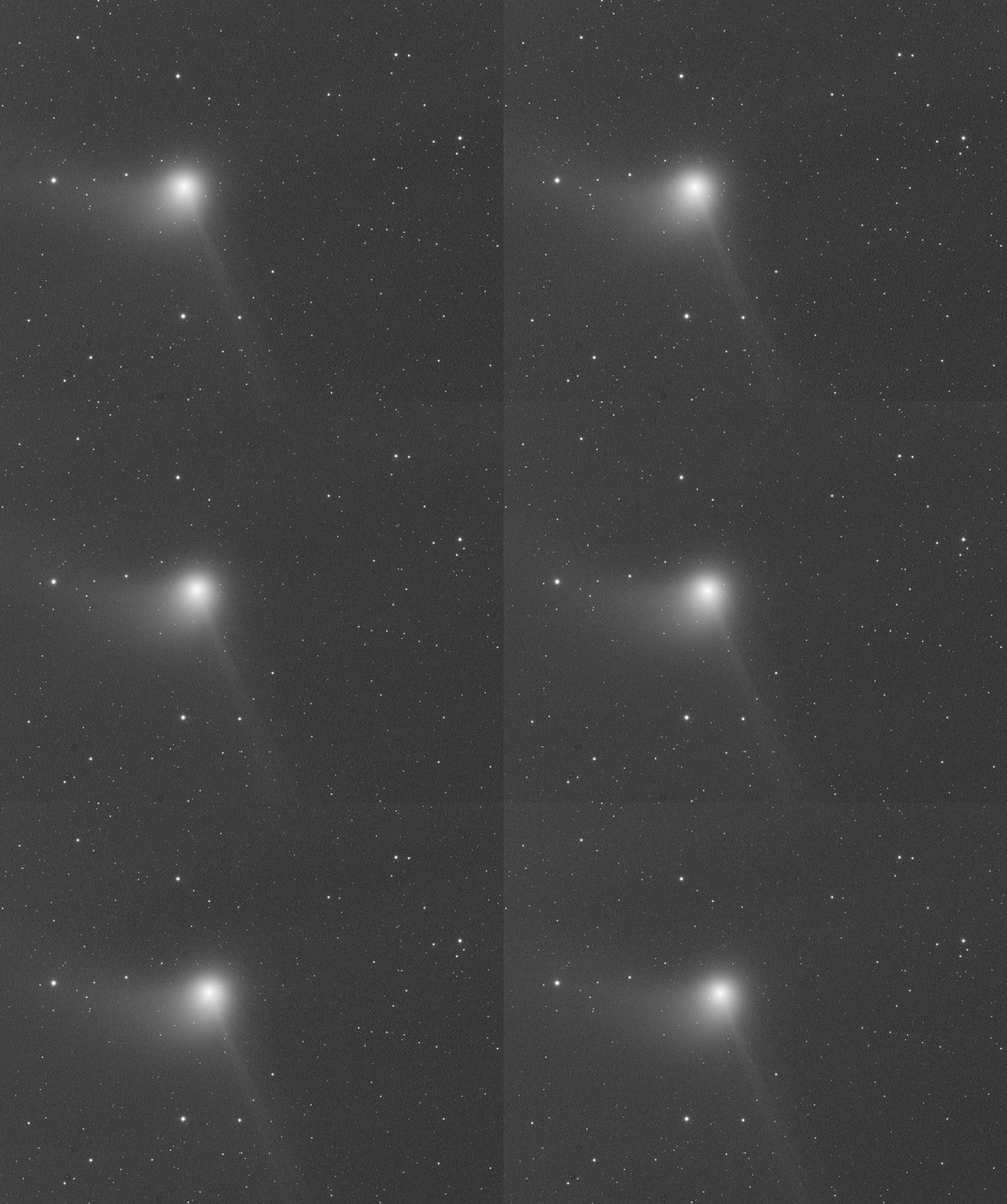
When discovered on 31 October 2013 observations from another object from 12 September 2013 were used in the preliminary orbit determination giving an incorrect solution that suggested an orbital period of only 6 years.[1] But by 6 November 2013 a longer observation arc from 14 August until 4 November made it apparent that the first solution had the wrong object from 12 September.[2]
By early May 2015 the comet was around apparent magnitude 12 and had an elongation of 60 degrees from the Sun as it moved further into the southern hemisphere.[7] The comet came to solar conjunction on 6 November 2015 when the comet was around magnitude 6.[6] The comet came to perihelion (closest approach to the Sun) on 15 November 2015 at a distance of 0.82 AU from the Sun.[3] At perihelion, it had a velocity of 46.4 km/s (104,000 mph) with respect to the Sun which is slightly greater than the Sun’s escape velocity at that distance. It crossed the celestial equator on 17 December 2015 becoming a northern hemisphere object. On 17 January 2016 the comet will pass 0.72 AU (108,000,000 km; 67,000,000 mi) from Earth and should be around magnitude 6[6] while located in the constellation of Ursa Major.
C/2013 US10 is dynamically new. It came from the Oort cloud with a loosely bound chaotic orbit that was easily perturbed by galactic tides and passing stars. Before entering the planetary region (epoch 1950), C/2013 US10 had an orbital period of several million years.[4] After leaving the planetary region (epoch 2050), it will be on an ejection trajectory.[4]
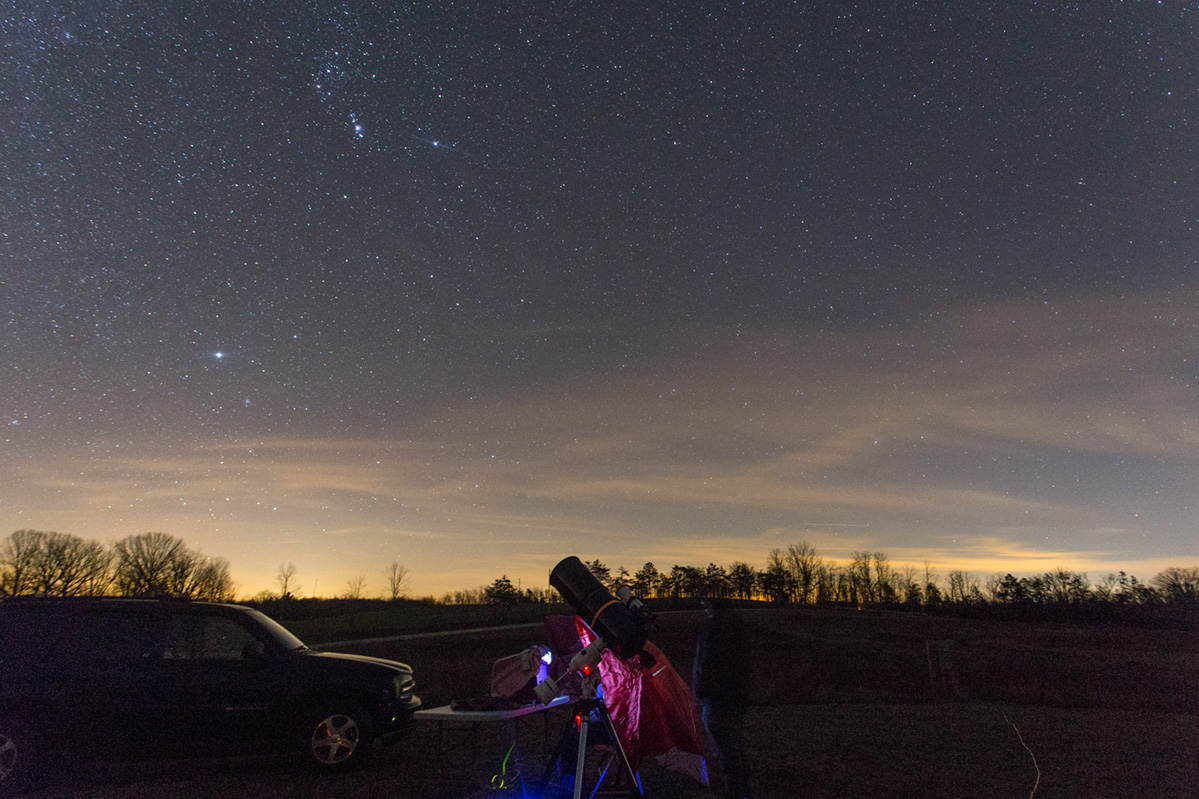
Thin clouds to the south lingered half of the night. 30 second exposure at 17mm FL, Canon 6D, tracked on StarSync Tracker. Orions belt and sword are prominent.
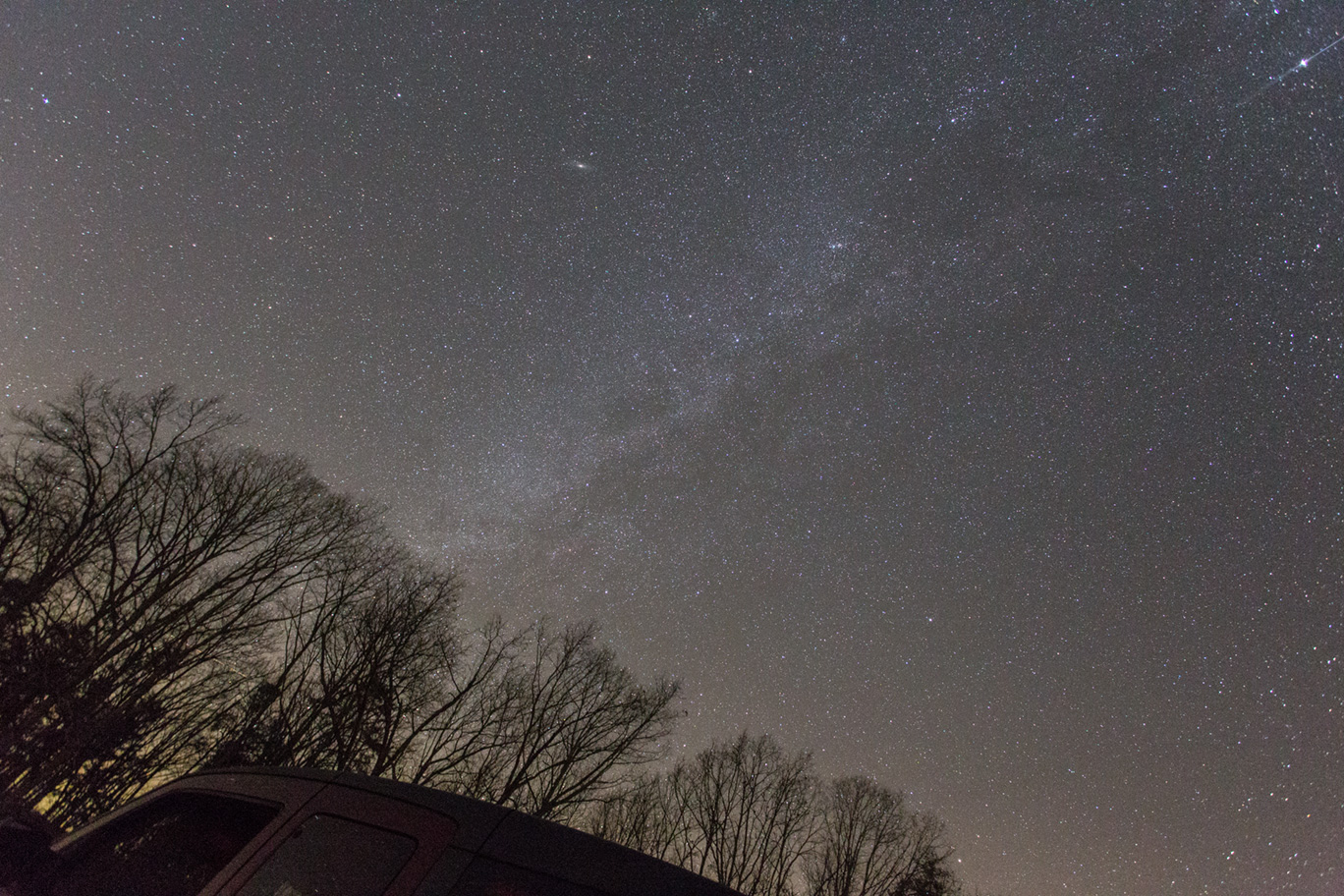
Another test of the StarSync Tracker. 17mm FL with Canon 6D, StarSync Tracker, 30 second exposure. M31, The Andromeda Galaxy, is the prominent galaxy in the top middle of the image; second of course to the winter Milky Way.
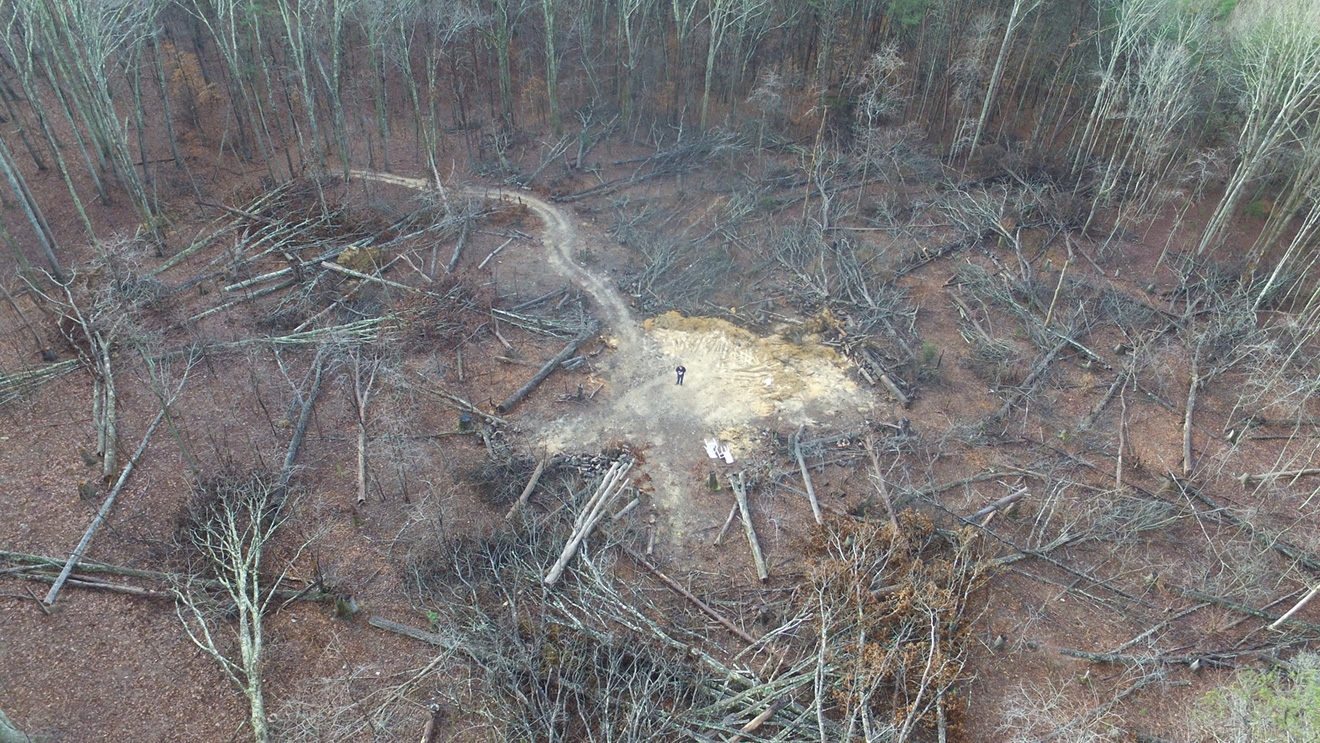
We’re coming up on the end of 2015. I had high hopes of getting more finished this year but all things considered, things are moving along. It shouldn’t be too long and our new garage with workshop will be finished which will allow me to layout imaging systems somewhere other than in our bedrooms…. From there, I hope to get the Exploradome up and running in 2016 with the OGS 10″ RC and U16 acting as the workhorse imaging system.
Digging out a few large stumpsAerial view of the observatory site. Needs a lot of cleanup.Testing the OGS 10″ RC