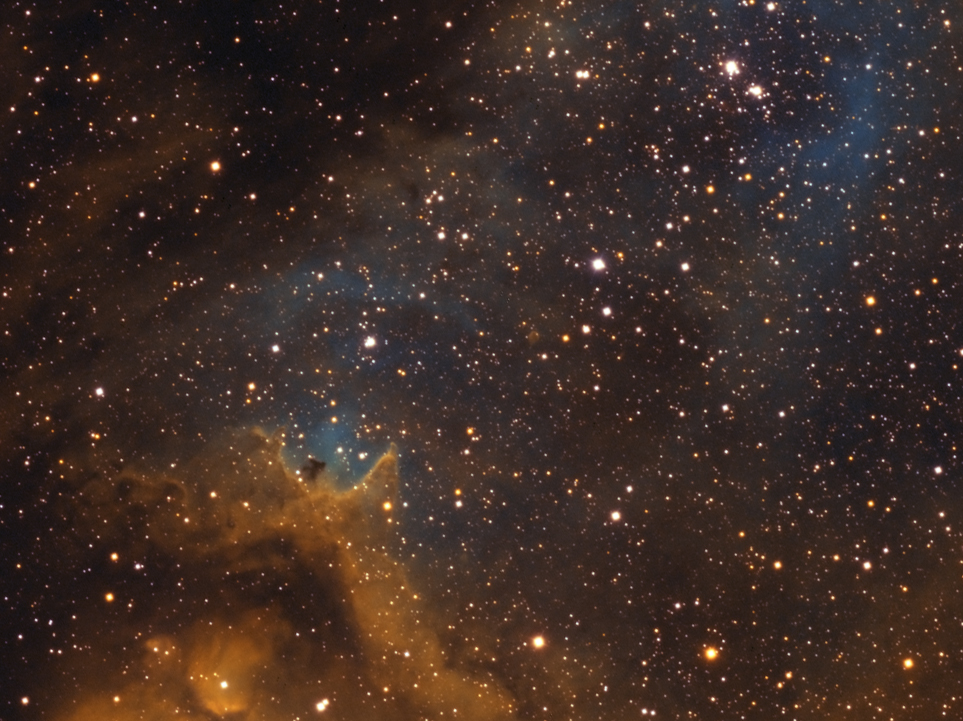
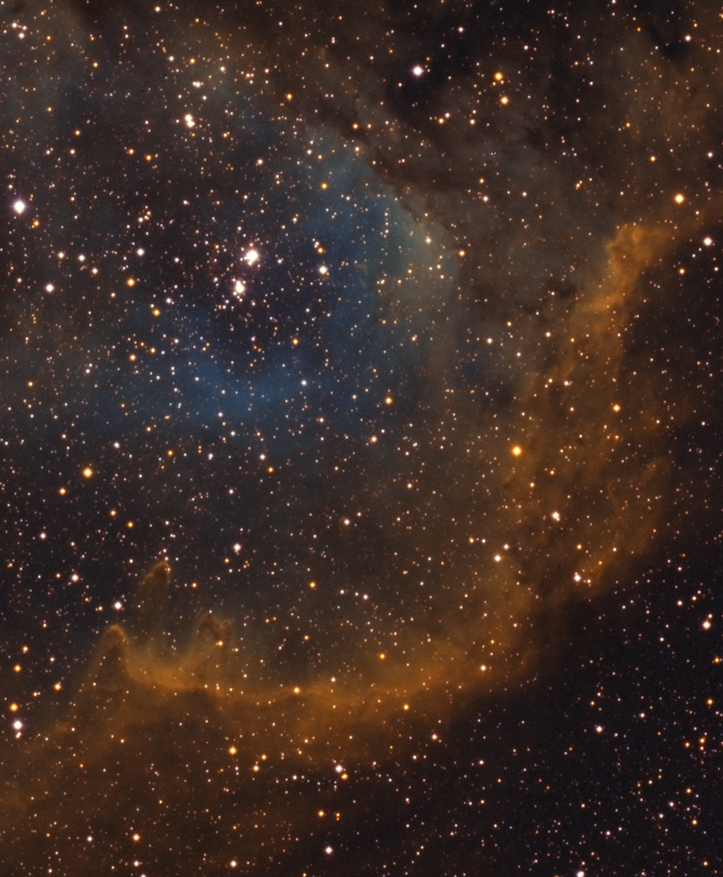
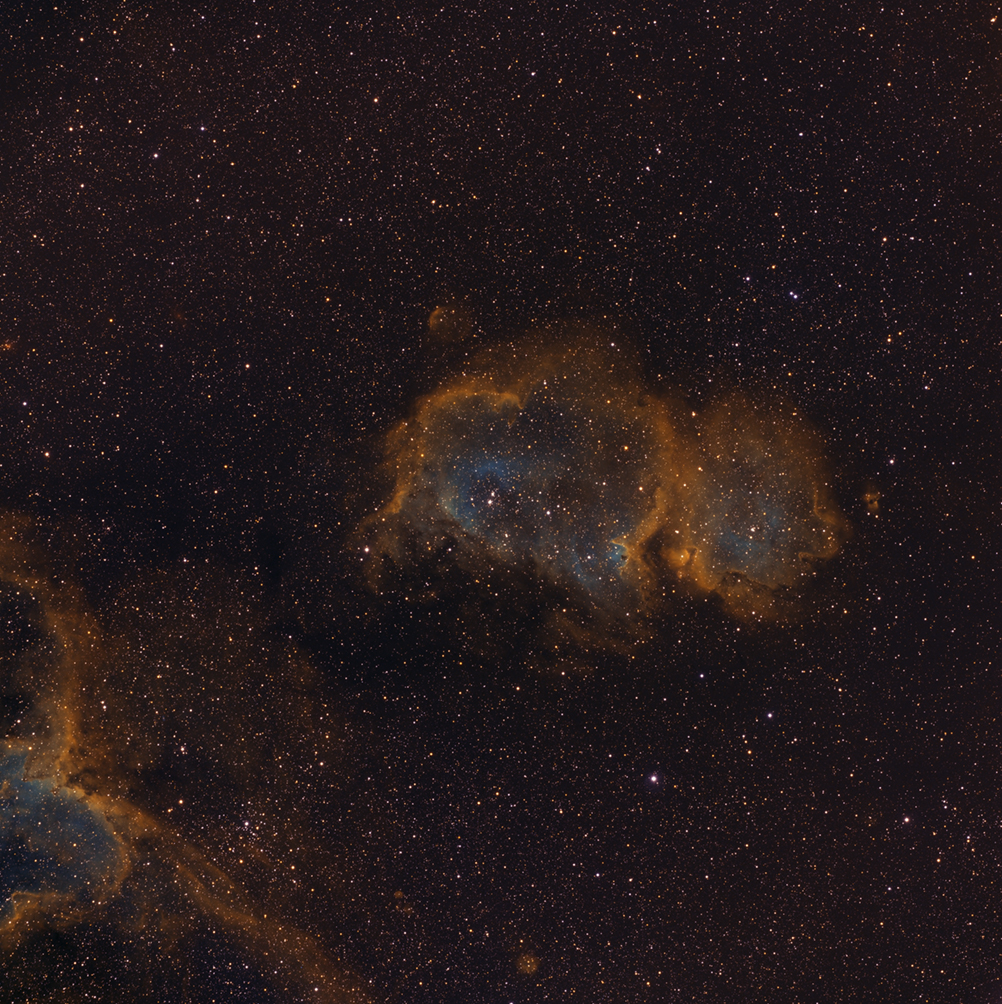
Last year (2014) I was conducting some mosaic tests for future projects. I attempted a widefield 9 panel mosaic in Cygnus and processed the hydrogen alpha data but never got around to completing the tri-color Hubble Pallet image until now due to some difficult to process issues in the O[III] and S[II] channels. Those difficulties, combined with the fact that I only gathered about one frame of each channel per panel in the mosaic (very thin data!), meant that I wasn’t exactly thrilled to process this one to completion. Time away from the hobby due to the out of state relocation though has made me a little anxious to get back to imaging so I decided to revisit some of this forgotten data.
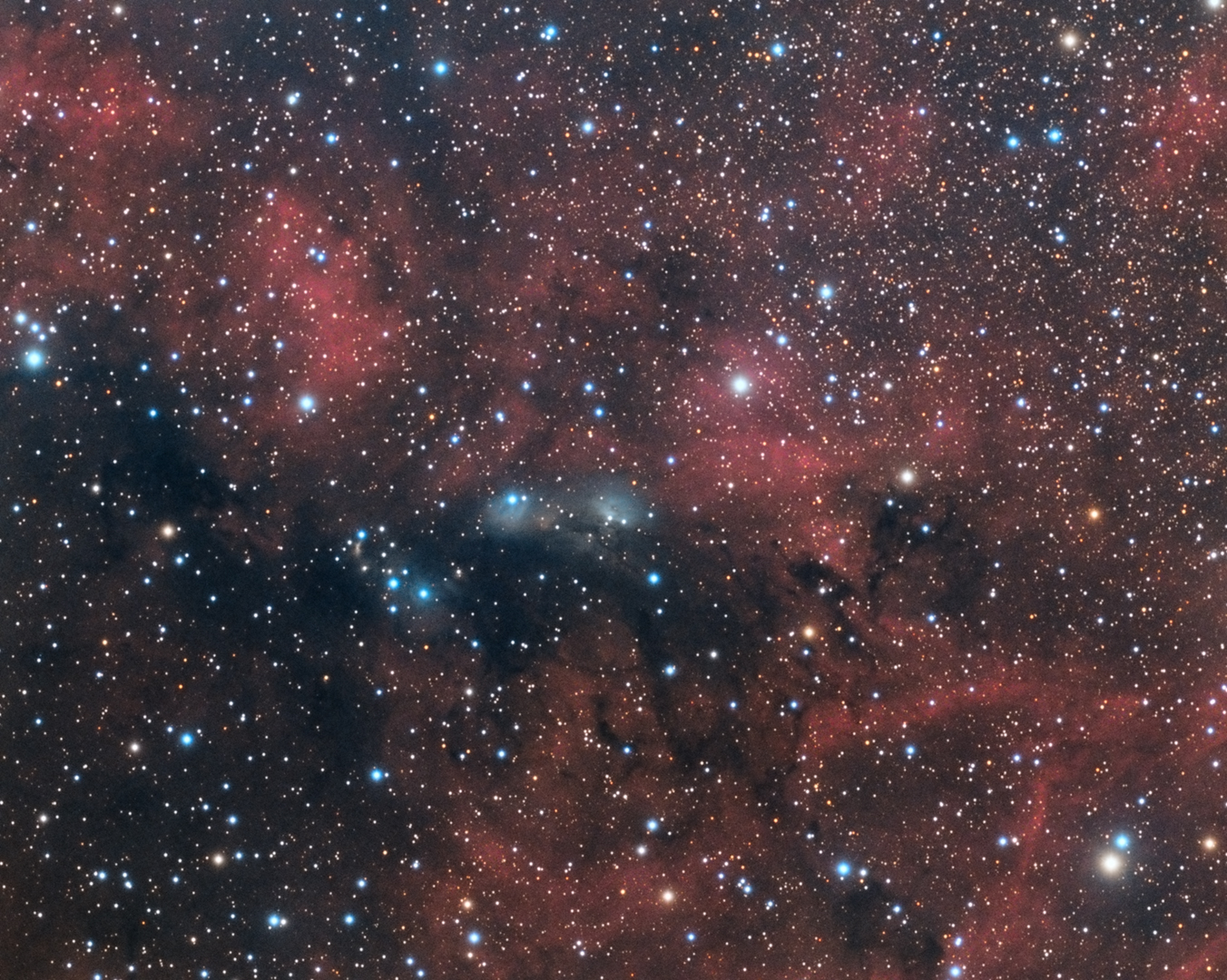
Cygnus Mosaic Cropped & Reduced to 50% Size. 9 Panels, 1x20min per Ha, O[III], S[II] Channel per panel. Total Time 9 hours. Taken with an Apogee U16M and Tak FSQ-106ED.
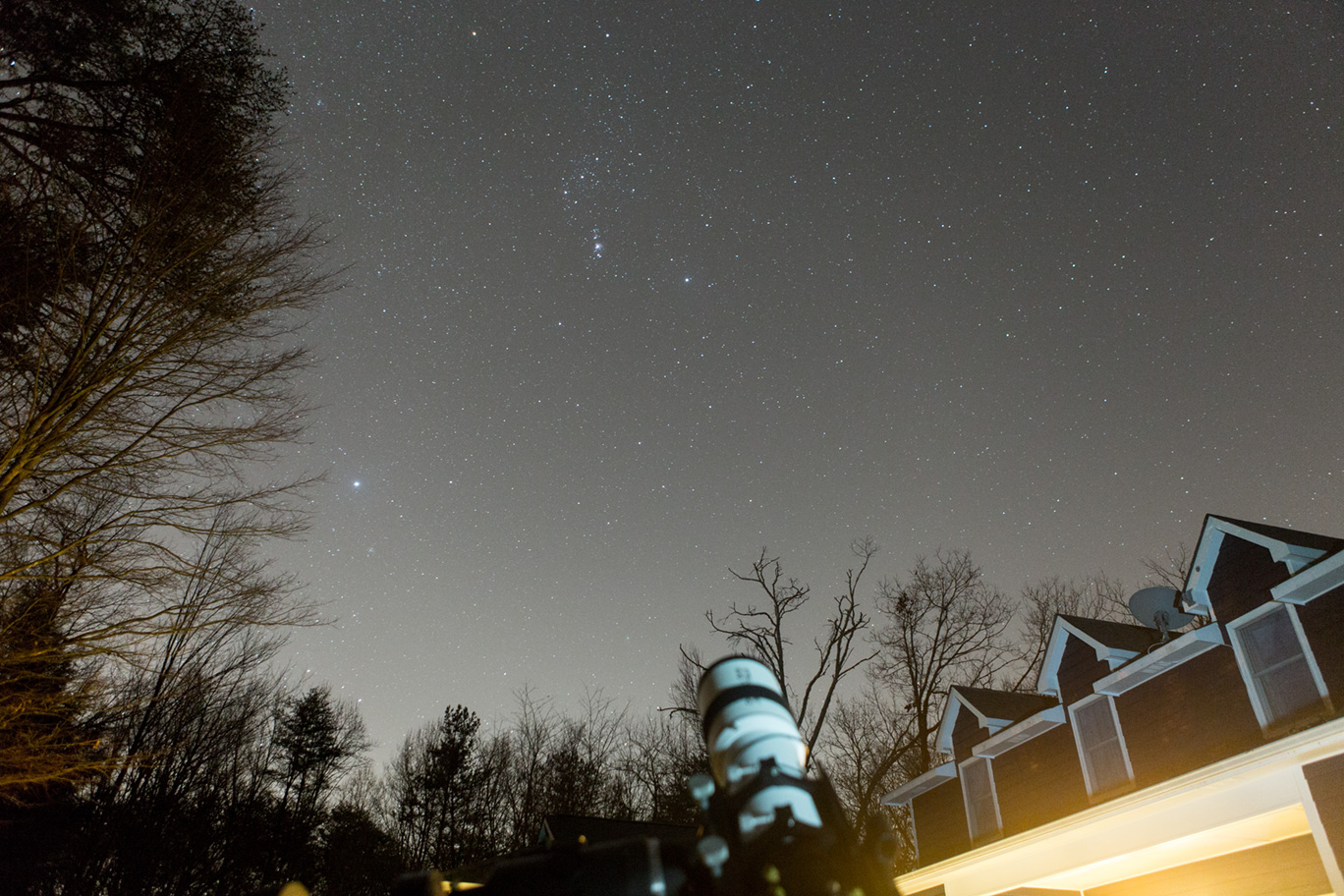
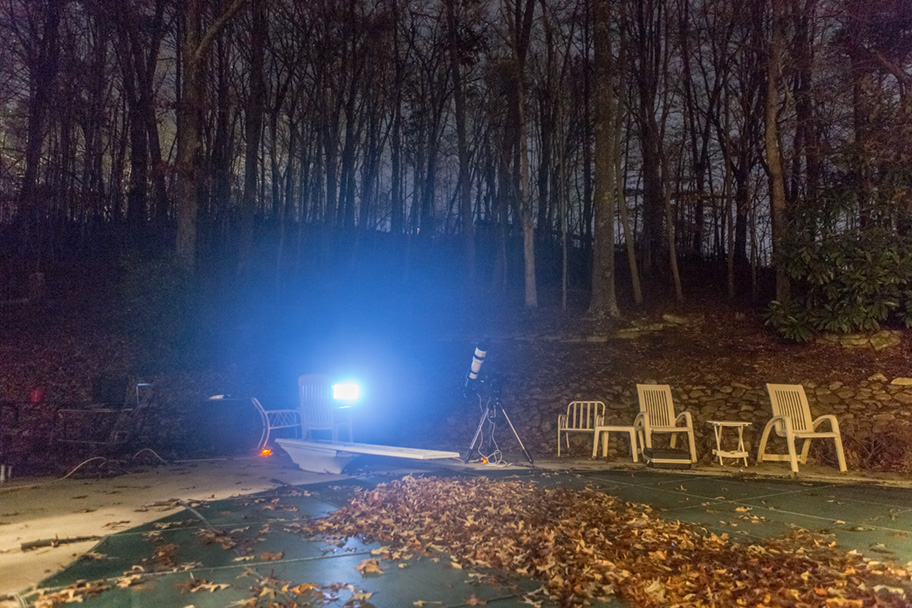
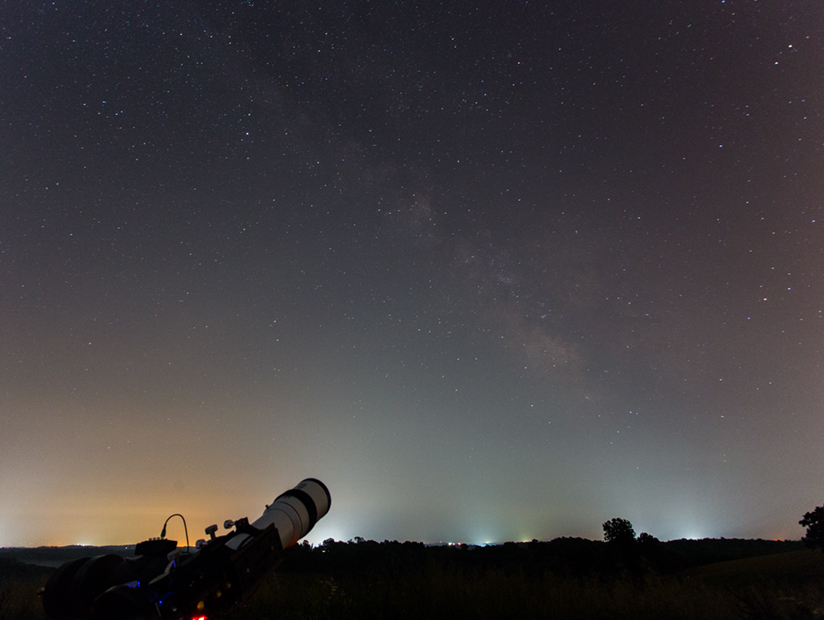
I’ve temporarily pulled the portable (read small) rig out onto my back patio by the pool which has a narrow window allowing imaging of the southern sky. Since the move to TN I haven’t had a lot of time to do any astronomical imaging but the bug to get out do some imaging finally got to me.
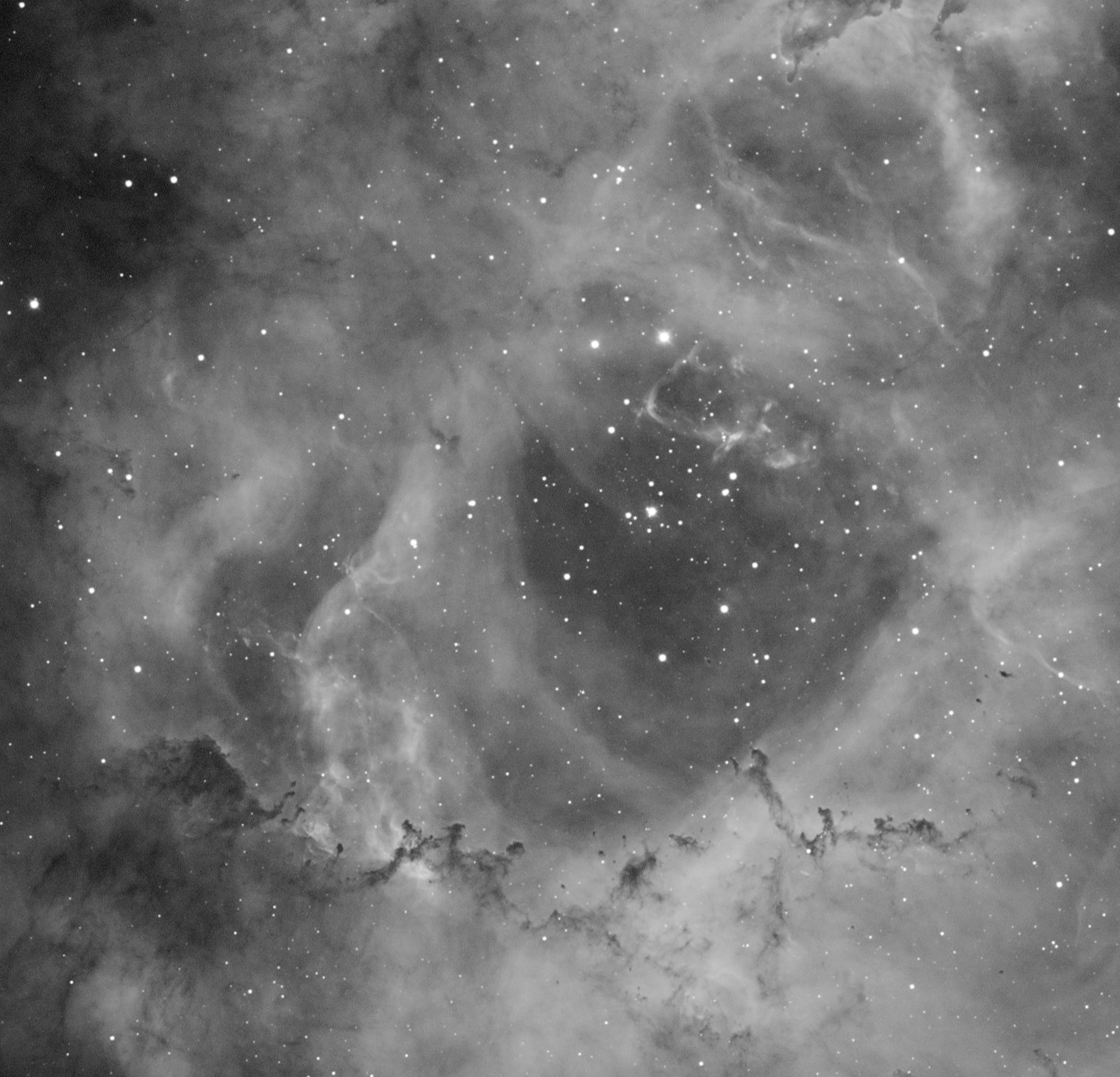
Rosette Nebula, Atlas EQ-G Mount, Stellarvue SVQ100 APO, Apogee U8300, 6x20min exposure with 3nm Astrodon Ha Filter.
I purchased one of the first Apogee Ascent A694 Cameras (Sony ICX694 Chip) before the acquisition by Andor and had some random horizontal banding across the top of the frame that was not possible to calibrate out:
Random Horizontal Banding: Pre-Repair
Andor issued an RMA and took care of the costs under warranty. They stated that they repaired the camera by replacing the whole electronics board.
Apogee A694 Evaluation – Post Repair
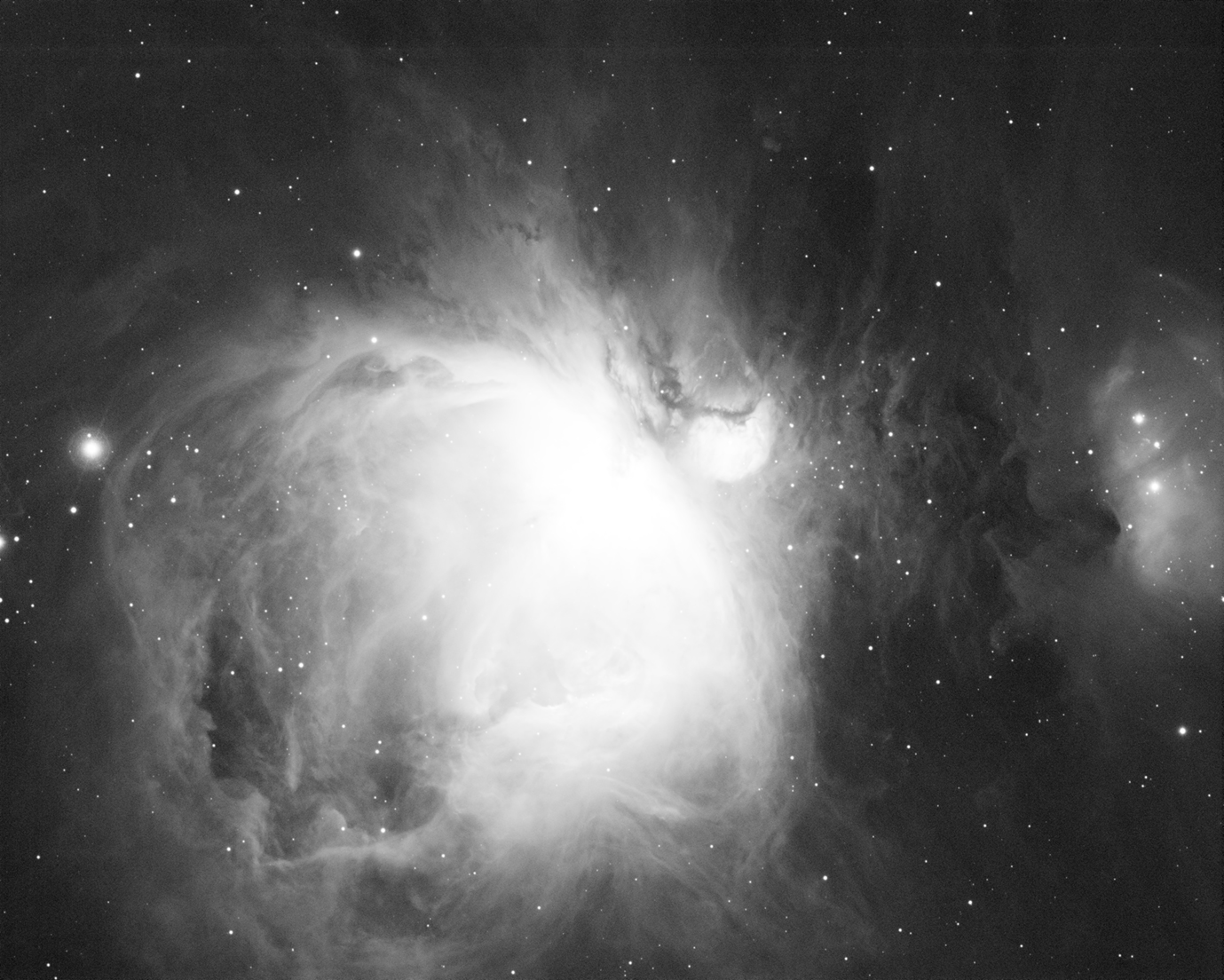
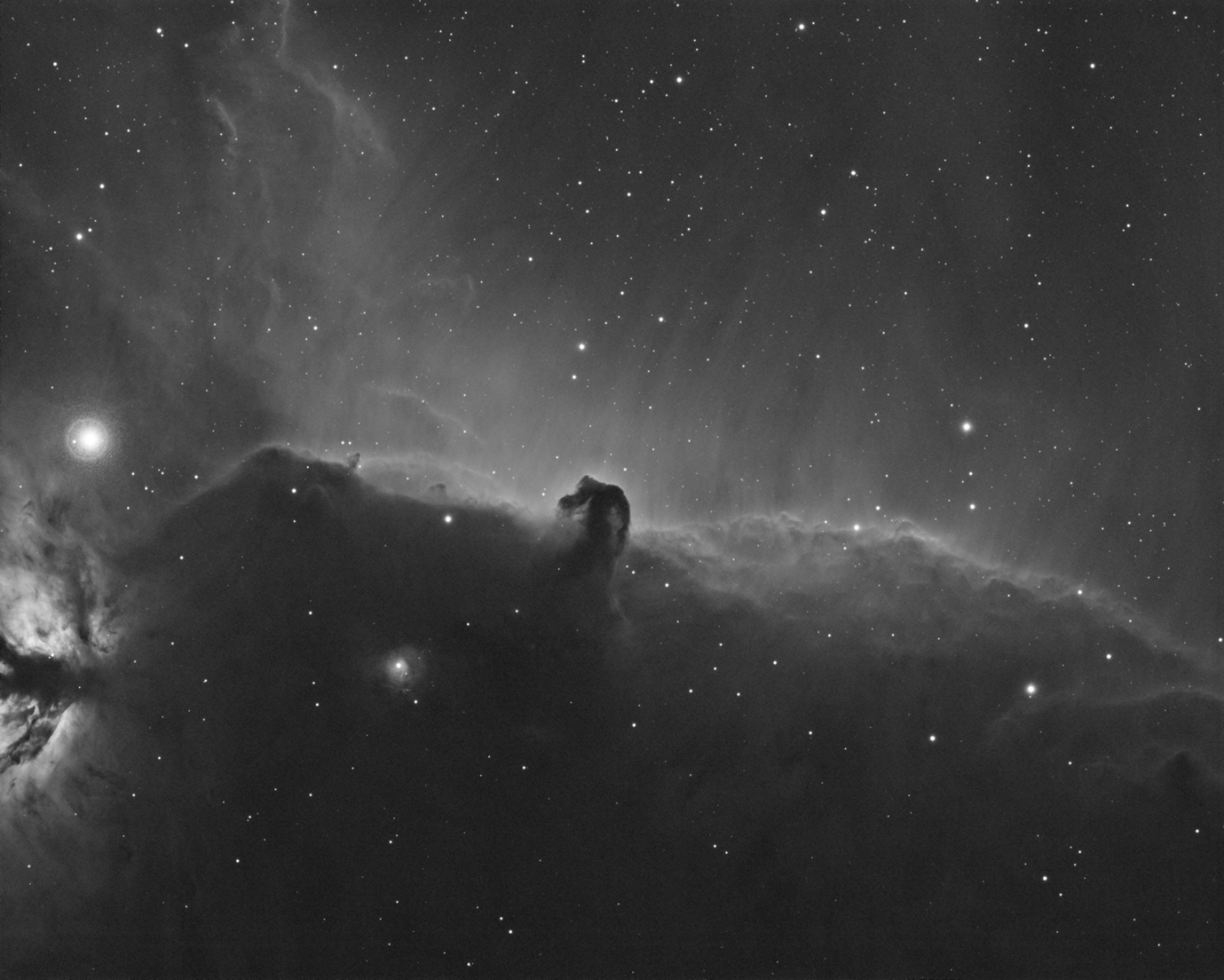
I was hoping to not see the random horizontal bands again but upon firing up the camera and cooling down to -15C there were still there although they are now contained in a smaller region closer to the top of the frame. It still moves around so calibration is difficult if not impossible. When using a small number of frames it is hard to statistically reject the band. You can see below in M42, reproduced at 50% size, that a bright band stands out across the top of the bias and dark calibrated image even after calibration. This is especially obvious in narrowband images where the background pixel count isn’t much higher than the bias floor. The band is also visible across the bottom of the Horse Head shot (I flipped the image) although it doesn’t stand out quite as much.
For a low bias noise camera geared towards narrowband imaging that I plan to use for portable imaging (lower frame count) I don’t think that my options are too great:
Cropping out the top part of the frame (It’s a small chip to begin with)
Trying to fix it in post processing (Different for every image)
I am also including 100% size images of the bias, master bias, dark, and master darks used to calibration the two trial images.
Apogee Ascent A694 – 6x10min Ha Evaluation after Repair.
Apogee Ascent A694 6x20min Post Repair Evaluation
Bias Frame
Master Bias
Dark Frame 10 minute
Master Dark 20 min
Here is what several bias frames look like animated to give you an idea how the horizontal banding moves around and therefore is not well calibrated:
This is certainly better than what it was before but I am still left with these bands appearing faintly in my images.
All images were captured with the CCD cooled to -15C. They were captured with MaximDL 5 and calibrated / processed in Pixinsight.
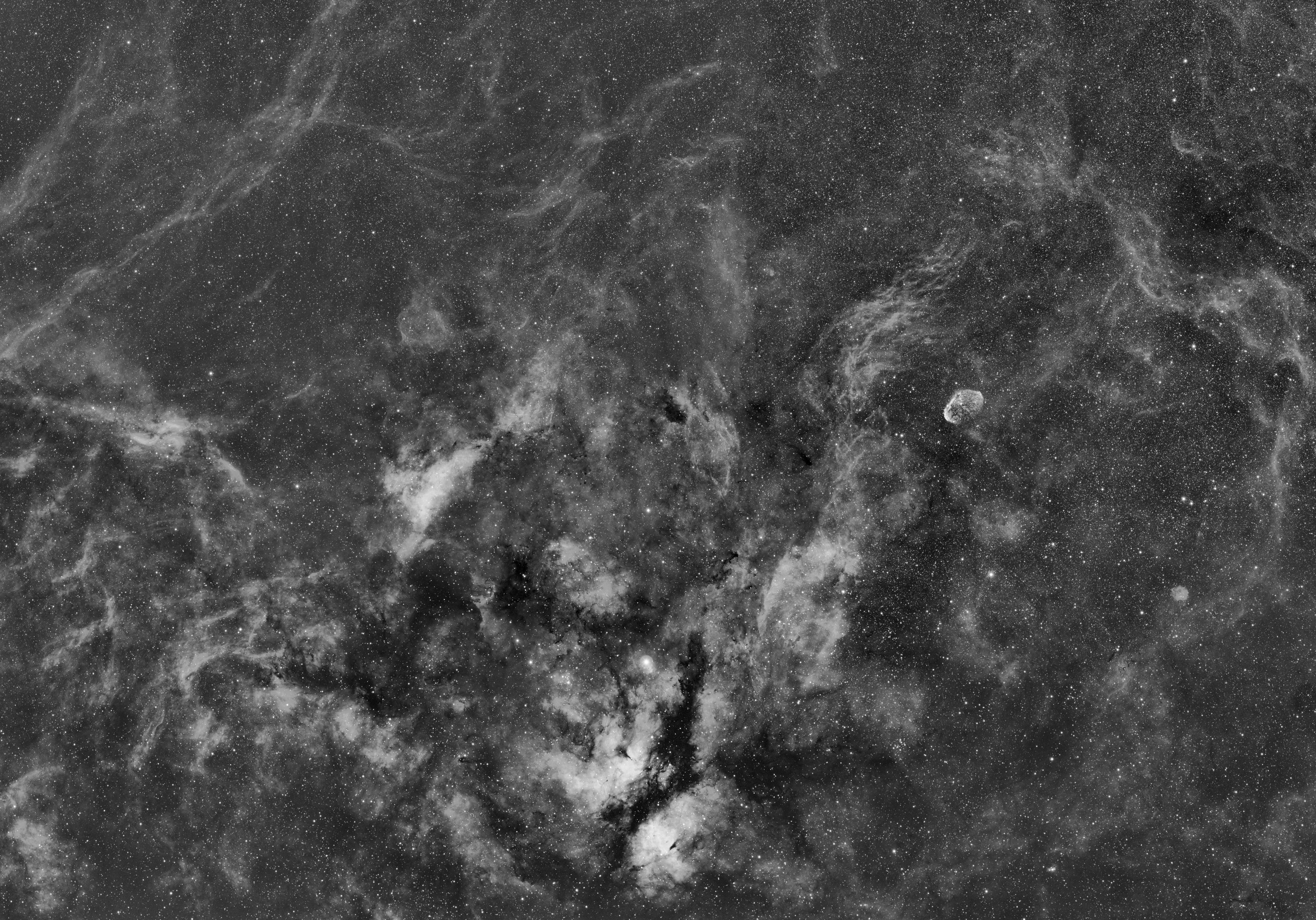
I began work on a tri-color Hubble Pallet image during the summer of 2014 but due to weather and other obligations did not capture much in the way of Oxygen [O III] and Sulfur [S II] emission data for the mosaic project so am leaving it as a monochrome image using only the Hydrogen Alpha emission line data.
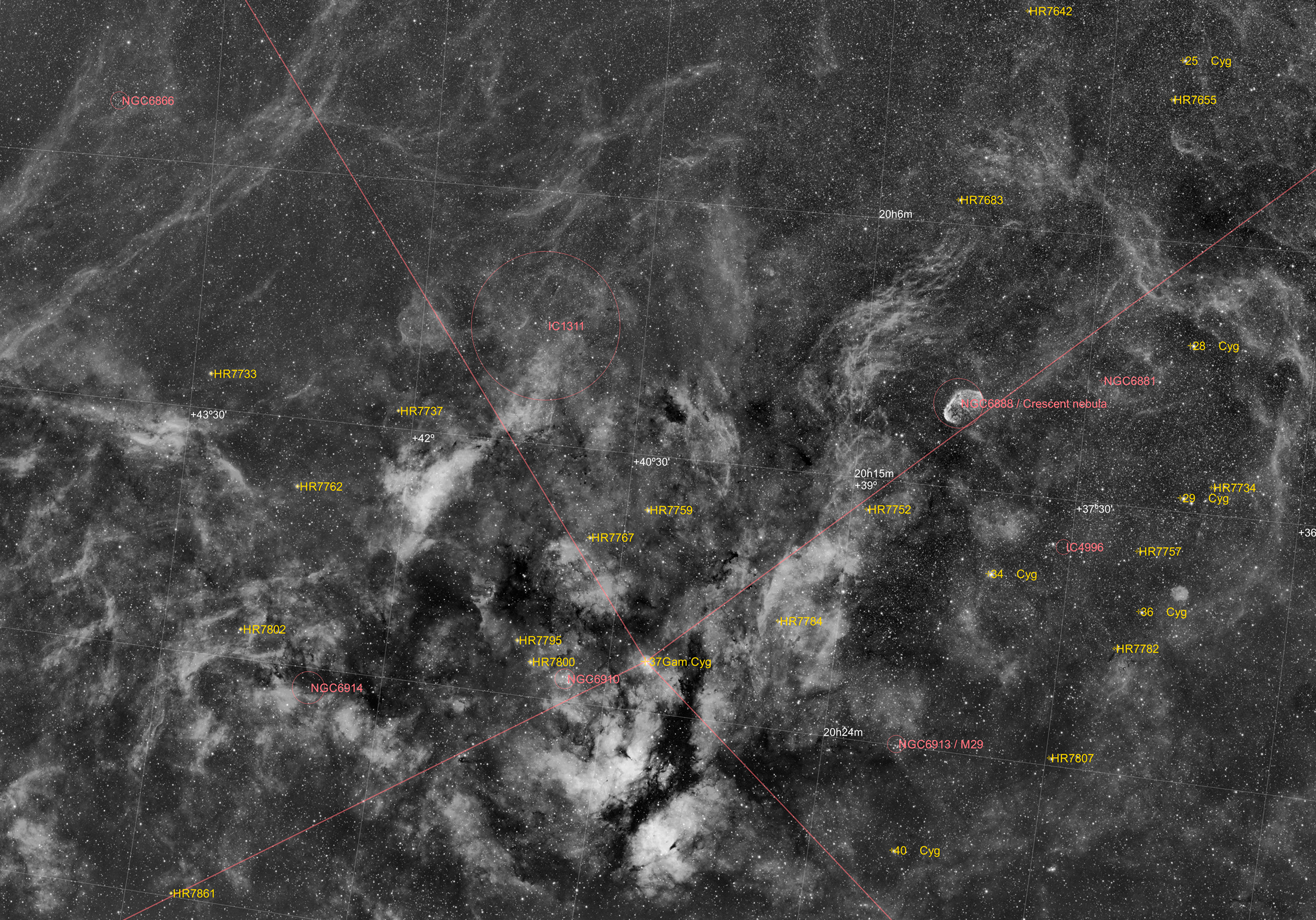
Cygnus Mosaic in Hydrogen Alpha Emission Line FSQ-106ED Apogee U16 CCD Baader 7nm Ha Filter AP900GTO Mount 6x20min Exposure Campmeeting Observatory, Sewickley, PACygnus Mosaic – Annotated
It’s that time of year when Cygnus rises high over head and displays a multitude of nebulous treasure. This mosaic is only a portion of the Cygnus constellation but represents a large patch of sky almost 9 x 9 degrees. This is only a test framing as I create a game plan for a summer long imaging project. For a sense of scale, I have included a gibbous moon which was not part of the original image as well as a full scale crop of the Crescent Nebula, bottom right, to show the full size scale of the original 83 megapixel image.
Cygnus Mosaic in Hydrogen Alpha FSQ-106ED Apogee U16 AP900GTO Baader Ha Narrowband Filter 9x20min total exposure
![Cygnus Mosaic Cropped & Reduced to 50% Size. 9 Panels, 1x20min per Ha, O[III], S[II] Channel per panel. Total Time 9 hours. Taken with an Apogee U16M and Tak FSQ-106ED.](http://www.celestial-imaging.com/wp-content/uploads/2015/05/Cygnus-Mosaic-20150531_V2.jpg)


![The Rosette Nebula: Apogee U8300 CCD, Stellarvue SVQ100 APO, Atlas EQ-G, Astrodon 3nm Filters, 6x20min each Ha, O[III], S[II].](http://www.celestial-imaging.com/wp-content/uploads/2015/01/Rosette-Stack-Hubble-2.jpg)